
← Verticals
The global room

International Relations

Geopolitical risk assessments and strategic research tracking global shifts through an India-first lens. Analyses multilateral frameworks, diplomacy and foreign policy posture.

What We Do

International Relations works in the global room, where India decides how it acts in the world. It tracks conflicts, trade agreements and diplomatic shifts, and always asks what they mean for India at home. Its research examines multilateral frameworks, regional security and India's foreign policy posture.

Who We Serve

Policymakers, researchers, diplomats, scholars and institutions working on India's external affairs.

What We Produce

  • Geopolitical risk assessments
  • Issue briefs on global developments and their domestic impact
  • Strategic research papers and policy trackers
  • Dialogues and roundtables with practitioners and scholars

Publications

  • Payment as Power: India's UPI Diplomacy
    International Relations · Research Article

    Payment as Power: India's UPI Diplomacy

    9 November 2026

    UPI has emerged as an instrument of India’s soft power, offering an interoperable and sovereignty-preserving alternative to Western Big Tech and China’s Digital Silk Road. Its international expansion strengthens digital diplomacy and Global South cooperation. However, geopolitical suspicions, market concentration, transaction costs and limited reciprocity remain challenges, requiring stronger regulatory frameworks for sustainable global adoption.

  • BRICS- An Alternative to the Western Power : Challenging Western Hegemony or Complementing existing Global Order
    International Relations · Research Article

    BRICS- An Alternative to the Western Power : Challenging Western Hegemony or Complementing existing Global Order

    9 November 2026

    BRICS seeks to challenge Western hegemony by promoting a multipolar world order, strengthening South-South cooperation and reducing dependence on the US dollar. Through initiatives like the New Development Bank, it offers developing countries an alternative platform. However, ideological differences, competing national interests and continued Western influence limit its ability to fundamentally transform the existing global order.

  • INDIA’S APPROACH TO DIGITAL PUBLIC INFRASTRUCTURE AS EXPORT POLICY
    International Relations · Research Article

    INDIA’S APPROACH TO DIGITAL PUBLIC INFRASTRUCTURE AS EXPORT POLICY

    16 October 2026

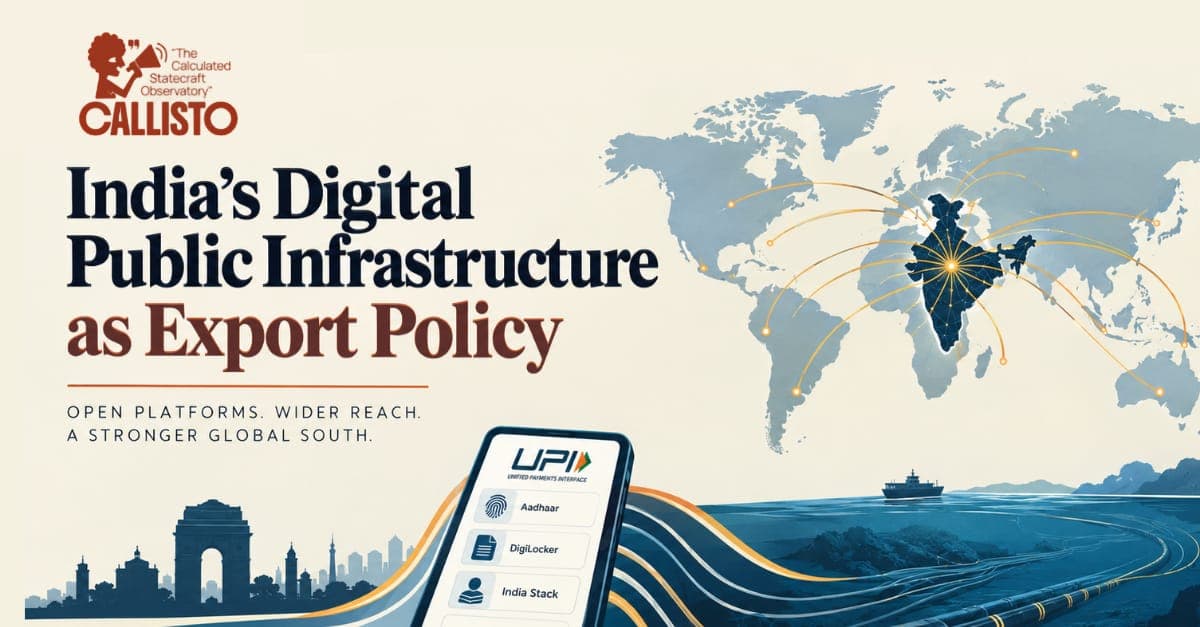
    India’s Digital Public Infrastructure export policy uses platforms like Aadhaar, UPI, and DigiLocker to strengthen digital governance, financial inclusion, and regional connectivity. By sharing these systems with the Global South, India advances its diplomatic influence and technological leadership, though data protection, institutional capacity, and effective implementation remain critical challenges.

  • VISION 2030: Tracking Saudi's Reform Agenda
    International Relations · Research Article

    VISION 2030: Tracking Saudi's Reform Agenda

    15 October 2026

    Saudi Arabia’s Vision 2030 seeks to diversify the economy beyond oil through private-sector growth, foreign investment, technological innovation, and structural reforms. Despite progress, persistent oil dependence, investment gaps, employment inequalities, and geopolitical instability challenge its long-term economic transformation and strategic autonomy.

  • Water as a Strategic Resource: India's Transboundary River Diplomacy
    International Relations · Research Article

    Water as a Strategic Resource: India's Transboundary River Diplomacy

    15 October 2026

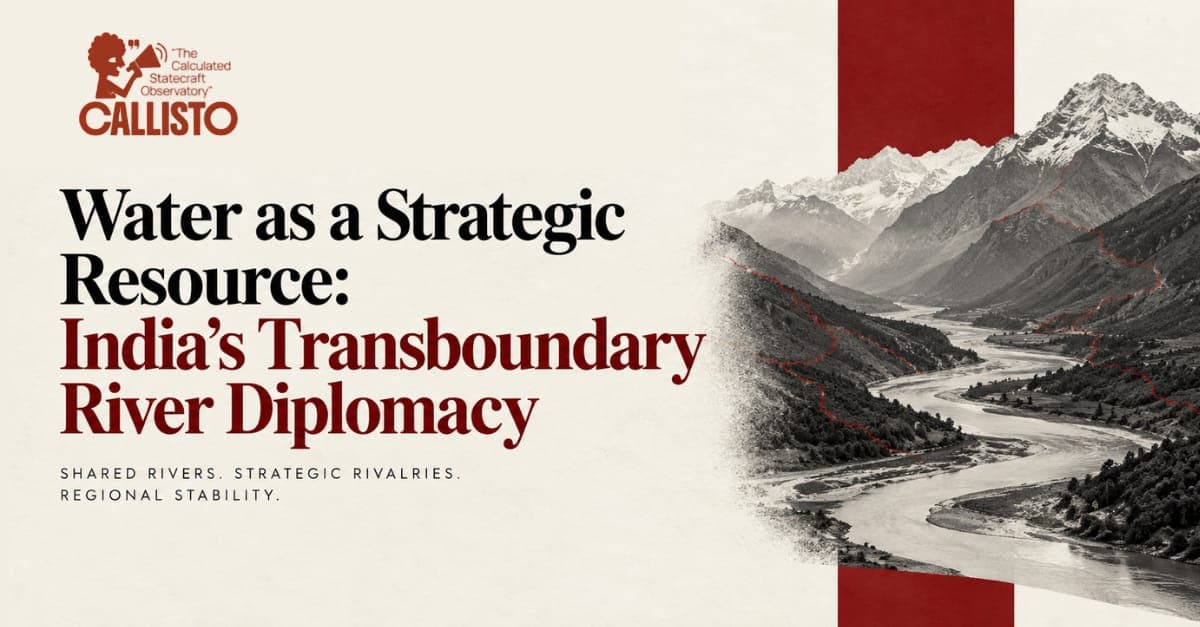
    India’s transboundary rivers shape its relations with Pakistan, China, Nepal, Bhutan, and Bangladesh. From treaty disputes to hydropower projects, water diplomacy reflects competing security and economic interests. The challenge lies in balancing strategic influence with regional cooperation, equitable governance, and climate resilience.

  • Invisible Arteries of Global Security: The Strategic Role of Submarine Cables
    International Relations · Report

    Invisible Arteries of Global Security: The Strategic Role of Submarine Cables

    15 October 2026

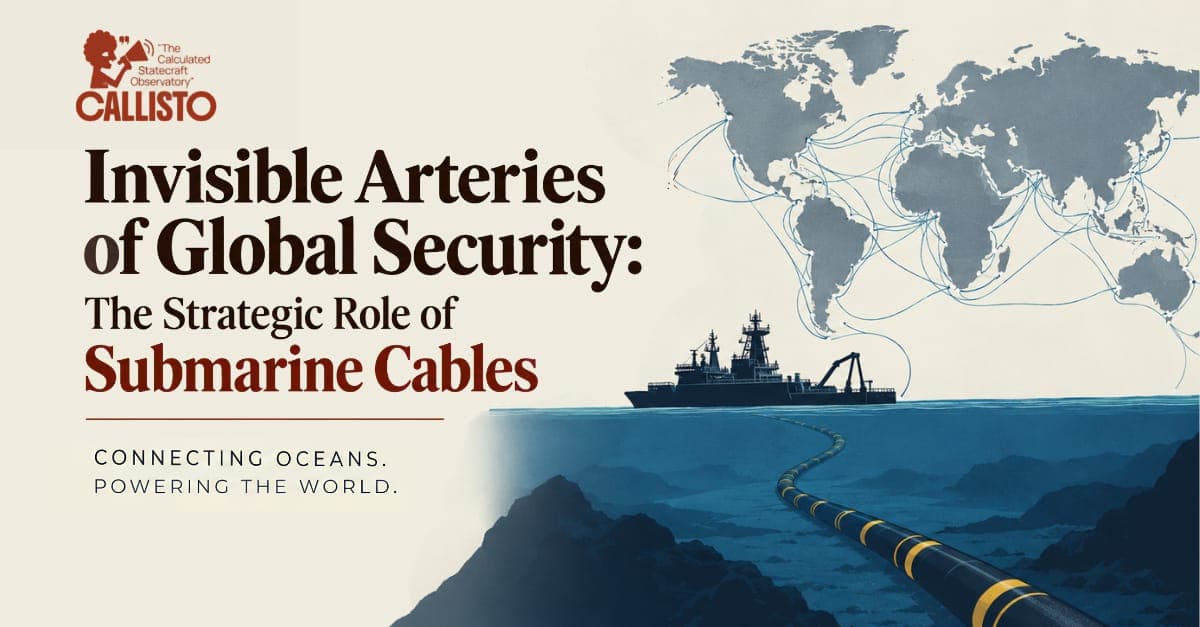
    The strategies for global security adopted under the waters, mainly focusing upon Baltic Sea, Taiwan and Bab-el-Mandeb. With a policy recommendation, the article explores strategic importance of submarine cables and the vulnerabilities posed due to international tensions.

From The Callisto Dispatch