
Flags and Coffins: Competing Narrative and the Politics of Symbolism
Introduction
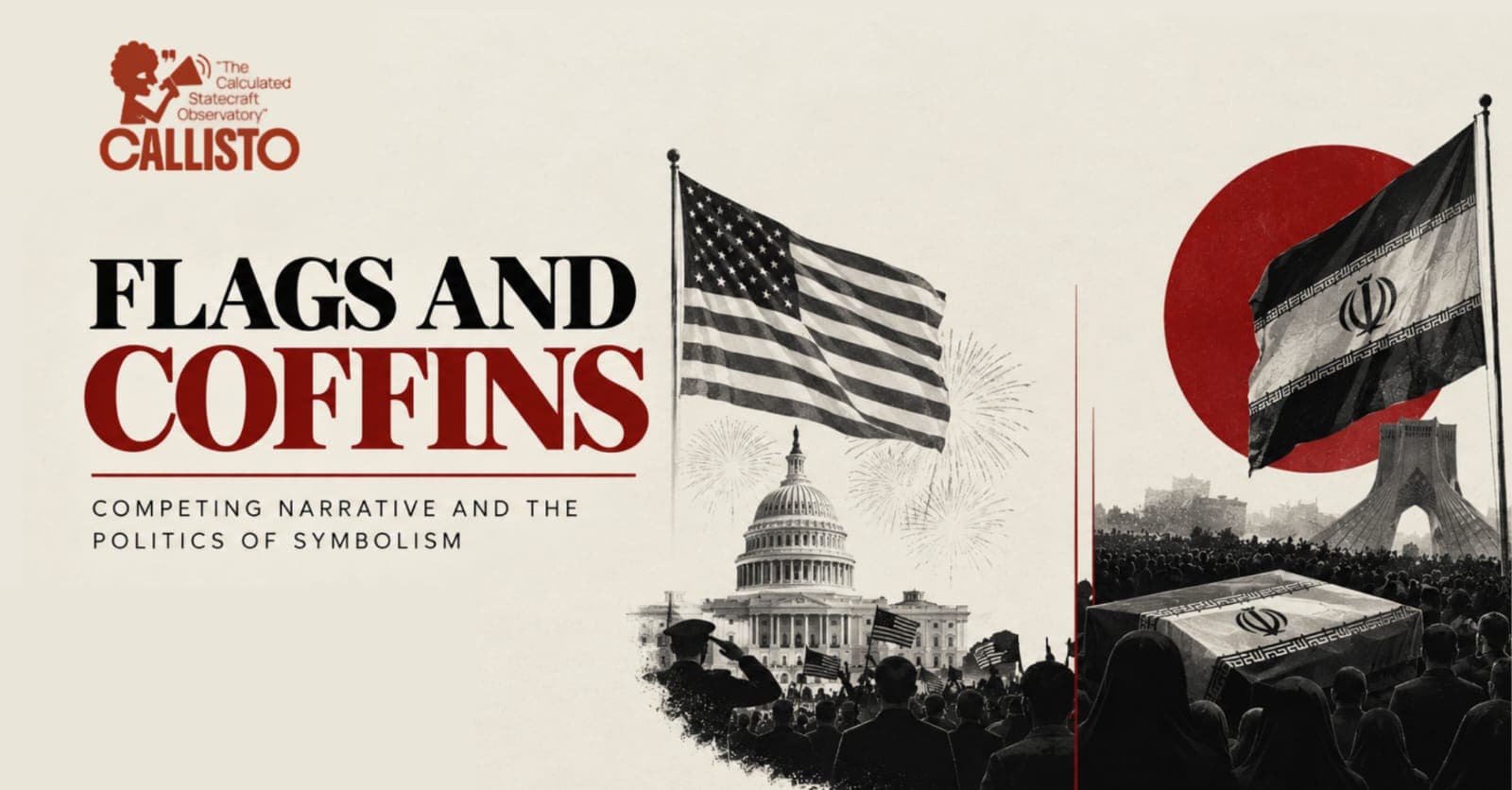
The dual events which took place at the same time on 4th July 2026 marked an extraordinary day in the calendars of geopolitics and diplomacy. As the United States of America were celebrating their 250th year of independence., Iran chose the date to mourn for the death of their Supreme Leader Khamenei. These events are not two isolated events, but an extension of the US-Iran conflict in a diplomatic battlefield rather than a war zone. This conflict had a huge impact claiming lives of millions and blocking a crucial global supply-chain maritime route damaging the global economy. The ceasefire was welcomed by the world, as the opening of Strait of Hormuz relieved the global economy and the world expected an end of the conflict, at least in regards to the armed conflict. Eventually the armed conflict had ceased, however both of them have continued diplomatic combat in the global scenario.
The Stage Before the Spectacle
The 4th of July being selected as the day for the state funeral for the Supreme Leader and his family members who were killed by a joint US-Israel strike was a conscious choice. Such ceremonies are not just simple ceremonies attended by the citizens, global leaders and mourning, but rather these are strategic events used as political theatres, moments when states perform legitimacy, mould perspectives, and send messages without communicating outright. From parades to funerals, these events are utilized as diplomatic signaling, creating solidarity or distance, and the presence, or absence of any foreign leader often speaks louder than any communique. Studying from the optics of political theatre, diplomatic signaling, and power, this day reveals the use of such events as a key tool in contemporary geopolitics.
World affairs are not only the result of negotiations, treaties, military power, but also of diplomacy and performances. State events like funerals as in the case of Iran, functions as political theatre where ritual spectacles by which states reinforce their power, identity and authority in the domestic as well as the global sphere. Any such event which occurs domestically is also staged for foreign audiences to carry strategic messages as effectively as formal means used by states. Political theatre are events, statements, or any actions used by governments to shape public perceptions as per their objectives.
Such performances reinforce national identity, regional dominance and create a strong global position as in the case of Iran. Their impact however depends on the reactions of other international actors and non-state actors. Likewise, diplomatic signaling works in the same fashion, where attendance of head of states or senior most officials at those particular events, or conveying personal messages by such dignitaries creates legitimacy, consolidation of support and recognition of states. This is where the absence or presence of such dignitaries matter the most. Besides, the rise of the use of visuals of individuals, images, symbols etc., intensifies the optics of power moulding international perceptions. Culmination of all these could be observed on the fourth day of July of this year.
Projecting Primacy: America’s 250th Independence Day
The 250th year of American independence was more than a celebration; it was a carefully orchestrated event which projected the American identity and global leadership against the backdrop of the recent conflict in the Middle East, as well as tensions in Europe. The event was organised not only to commemorate the liberation and establishment of the republic, but also to reaffirm Washington’s position as the leading power in the contemporary international order.
The President’s address was a key aspect of the day; the POTUS all over his speech maintained a continuous narrative of liberty, military victories, technological innovations, and national pride. The POTUS emphasised the States to be the “home of freedom” and “the hope, promise, the light and the glory among all nations of the world,” equating these universal principles as American, asserting the republic thrives to be strong, safe and more prosperous at this date. The speech was directed to assert the legitimacy of American leadership and activities in the global theatre.
Relying heavily on historical symbolism, original revolutionary flags were used, veterans of the Civil War were paid tributes, and other major events, along with references to the Constitution, created an undisturbed American greatness. Connecting it with past wars, the intent was clear, to justify the future leadership of America based on its past achievements. A significant aspect was the use of language and its strength, use of words repeatedly like ‘victory’, ‘stronger’ and phrases like ‘America is back’ is a strategic method of constructing a narrative to restore American primacy. The particular use of these expressions exhibits Washington’s attempt to project their victory in the recent conflict, for example this specific phrase “wiped out” denotes this. This reflects strategic use of narratives and symbolism to reinforce American legitimacy, and to maintain domestic as well as global support by trying to reshape global perspectives in this conflict. At the same time Washington’s performance was completed by unfolding events in Tehran, while on one side events of spectacle and celebration were taking place, on the opposite side stood defiance and mourning . This contrast made the 4th of July a symbolic day, marking a symbolic contest between dominance and defiance.
Funeral Diplomacy: Tehran’s Display of Defiance
The state funeral of the former Supreme Leader Ayatollah Ali Khamenei became a crucial event because of the date. State funerals are not only moments of mourning, but is an organised symbolic event, as in Iran’s case the event held a geopolitical significance after a full-scale confrontation with Israel-US, becoming a duel event of departure of the longest serving leader of the republic and tackling public emotions which greatly differed in such moments of tension and grief. The event was attended by global audiences, which contrasted the claims of Tehran’s isolation. However, Iran used this event strategically by official speeches, religious symbolism, and revived the revolutionary imagery of ‘muqawama’ meaning resistance asserting Iran’s strength of resisting a powerful coercion. The death of the Supreme Leader was projected as ‘sacrifice’, historical events of wars were drawn upon to reinforce and mould public opinion and maintain support for the institutional continuity.
The global attendees were not received not only as mournours, but as honoured guests with a combination of religious-political ritual. The hosts received the delegations with specific verses from the Holy Quran, like “Allah is sufficient for us, and He is the best disposer of affairs” (3:173) for India, which can be attributed to India’s long-standing policy of strategic autonomy despite different dispositions. Such verses were changed with every delegation, and strategically used for all delegations which included countries like Russia, China, and other global actors. Ultimately, the funeral functioned as a carefully designed strategic diplomacy declaring Iran’s sovereignty, defiance to western dominance and global relevance.
Spectating The Stage: Strategic Signalling and Diplomatic Attendance
As Washington and Tehran competed on the geopolitical stage on 4th July 2026, the other states constituted the global audience of both the events, giving significance to both these events and also determining their relevance over one another. While attendance to a national event is seldom protocol only in diplomacy, however the rank of the delegation, language, duration of visits and meets determine the significance of the attendees, and also the event simultaneously. This can be understood through the July 4th scene.
The delegations to Tehran were mostly from the Muslim world, Global South and few other European states. India was represented by MoS for External Affairs Pabitra Margherita and Bihar’ governor Lt. Gen. (retd.)Syed Ata Hussain, reflecting New Delhi’s effort to balance strategic partnership with Iran as well with the West. While Pakistan PM, and Field Marshal Asim Munir personally attended the event, underscoring Islamabad’s wish to remain relevant in the Muslim world, after the failed Islamabad talks. Russia sent Dimitry Medvedev, former President and Deputy Chairman of Russian National Security Council signifying Moscow’s enduring strategic partnership with Iran. The Chinese delegation was led by Mr. He Wei, senior member of National People’s Congress. The Turkish Vice-President C. Yilmaz, and Taliban Foreign Minister Amir Muttaqi were among other delegates. Other important delegates were from Tajikistan, Armenia, Georgia, and even Iraq projecting Tehran’s consolidation of political and diplomatic support across continents.
However the audience at the American grandeur was a completely different one. There were the government and legislators, officials, generals, veterans and other leadership along with other diplomatic representations from respective embassies. The American celebration was centered around America, and no presence of foreign leaders, reaffirming the sole strength of American leadership and might in the global orders. Although global leaders sent their congratulatory messages to the White House, President Trump’s speech constantly focused on American strength and “winning like never before”.
The difference between the two audiences is of major significance, while the audience at Tehran constituted mostly the global audience of different delegations from across continents, while the audience at Washington was mostly domestic with a lesser diplomatic or global presence. The response of the global actors to Tehan’s invitation to the state funeral reflected not ideological support to the Islamic Republic but a tendency of middle powers to engage with multiple other states and avoid exclusive alliances in an increasingly multipolar world order. As their attendance reflected this very tendency at the same time it portrayed global diplomatic support to Iran’s defiance. By contrast Washington sought legitimacy from the established alliances, projecting continuity of military and economic strength in the current geopolitical scenario. While Tehran successfully exhibited, that decades of diplomatic sanctions and cornering had failed to isolate them, Washington focused on its continuing relevance.
Conclusion
The simultaneous events of 4th July 2026, was more than an unusual overlap, but rather a diplomatic battle between the two rivals. This was a symbolic warfare between the two, and the one who controlled the narrative through symbolism and diplomacy has cemented its position more strongly in the international order. Observed through political theatre and diplomatic signalling, this event signifies that geopolitics has moved beyond just using military strength to symbolism and control of narratives. National ceremonies, events, composition of diplomatic audiences or even hosting global events have become tools for creating legitimacy, acquiring political recognition at both domestic and international sphere, and shaping the respective perception of the modern state.
The need for a third-party response signifies that the world has stepped quite forward in a multipolar world shifting from the earlier binaries of a bipolar or a unipolar world order. Instead of picking sides , most countries, or the middle-powers especially maintain a deliberate strategic autonomy, like in the case of US-Israel versus Iran. As these states are dependent on the West for various strategic purposes, the entire globe sits helpless when Iran dominates a crucial trade route like the Strait of Hormuz. The 4th of July thus signifies that current geopolitical competition has now entered into an era, where established dominance is facing active defiance not only militarily but through every other forms like choking economic sectors to symbolic diplomacy. The events of the day demonstrated that influence is measured not by capacity to shape results, but also the ability to shape global perceptions.
Sources
Kertzer, D., I. (1988), Ritual, Politics, and Power. Yale University Press.
https://archive.org/details/ritualpoliticspo0000kert/page/n3/mode/2up
Nakhoul, S. (2026, July 6). Khamenei’s funeral signals Iran’s defiance and new regional order. The Reuters.
Saikal, A. (2026, July 6). Mourning and celebration collide as Iran, US both claim victory. ASIA TIMES.
https://asiatimes.com/2026/07/mourning-and-celebration-collide-as-iran-us-both-claim-victory/
Samija, M., M. (2026, July 14). Quranic Diplomacy: How Iran Communicated Through Sacred Verses at Khamenei’s Funeral. The Diplomatic Insight.
https://thediplomaticinsight.com/quranic-diplomacy-iran-verses-khamenei-funeral/
Shamim, S. (2026, July 3). Iran’s Khamenei funeral: Which World Leaders are attending?. Al Jazeera .
https://www.aljazeera.com/news/2026/7/3/irans-khamenei-funeral-which-world-leaders-are-attending
Sharfer, A. (2026, July 5). Trump’s 250th Address: Fierce Attack on Left and Armed Conflict Boasts. JFEED.
https://www.jfeed.com/news-world/trump-250th-anniversary-speech
Continue reading
 International Relations
How Should India and the EU Strengthen Semiconductor Resilience in an Era of Geopolitical Competition?
23 October 2026
The India-EU semiconductor partnership faces critical gaps in implementation and rare earth diversification. This article explores how coordinated policies, strategic mineral partnerships, and reduced dependence on China can strengthen supply chain resilience amid geopolitical competition.
 International Relations
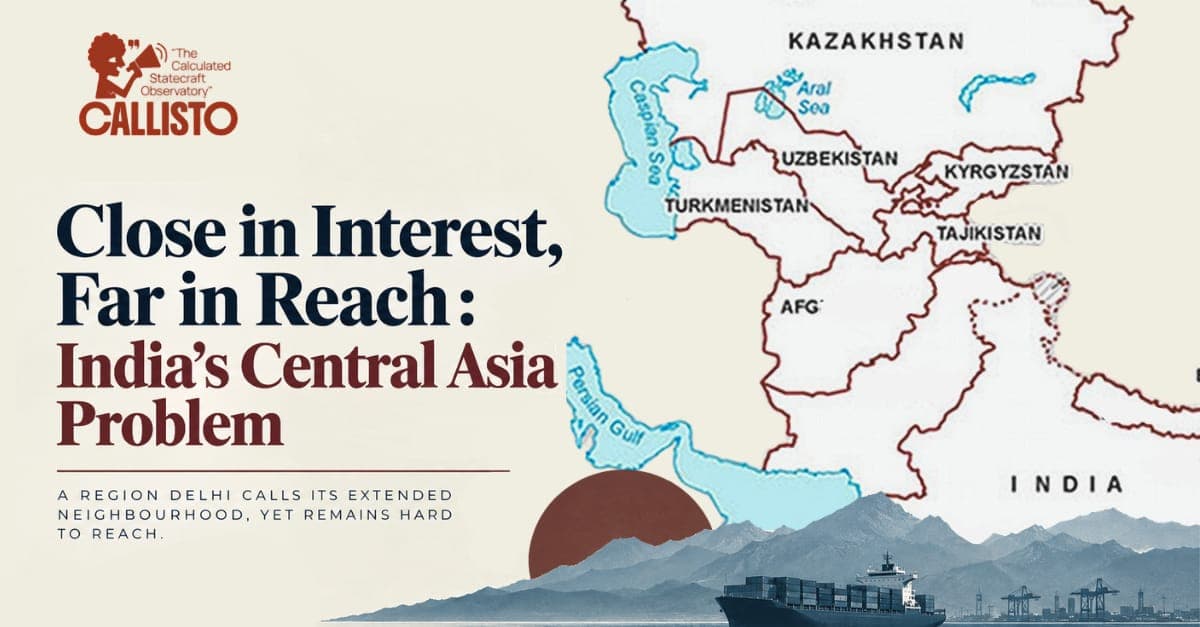
Close in Interest , Far in Reach : India's Central Asia Problem
17 October 2026
A region Delhi calls its extended neighborhood matters for energy, security and diplomacy, yet it remains hard to reach.
 International Relations
Trump-Xi Summit: Navigating a New Cold War
10 October 2026
Trade relations of the commodity of AI tech are analyzed through the Trump-Xi Summit in the context of the changing dynamics of U.S.-China relationship and Taiwan as a site of importance in this.
0 likes · 0 comments
Comments
No comments yet.
Your comment