
Trump-Xi Summit: Navigating a New Cold War
Introduction
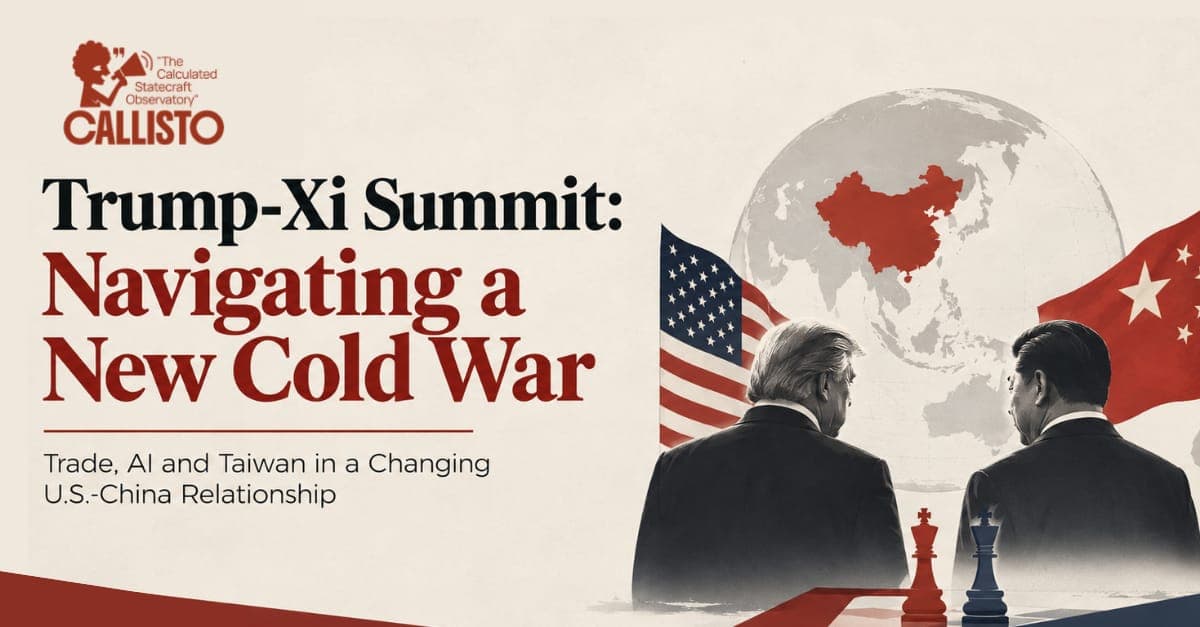
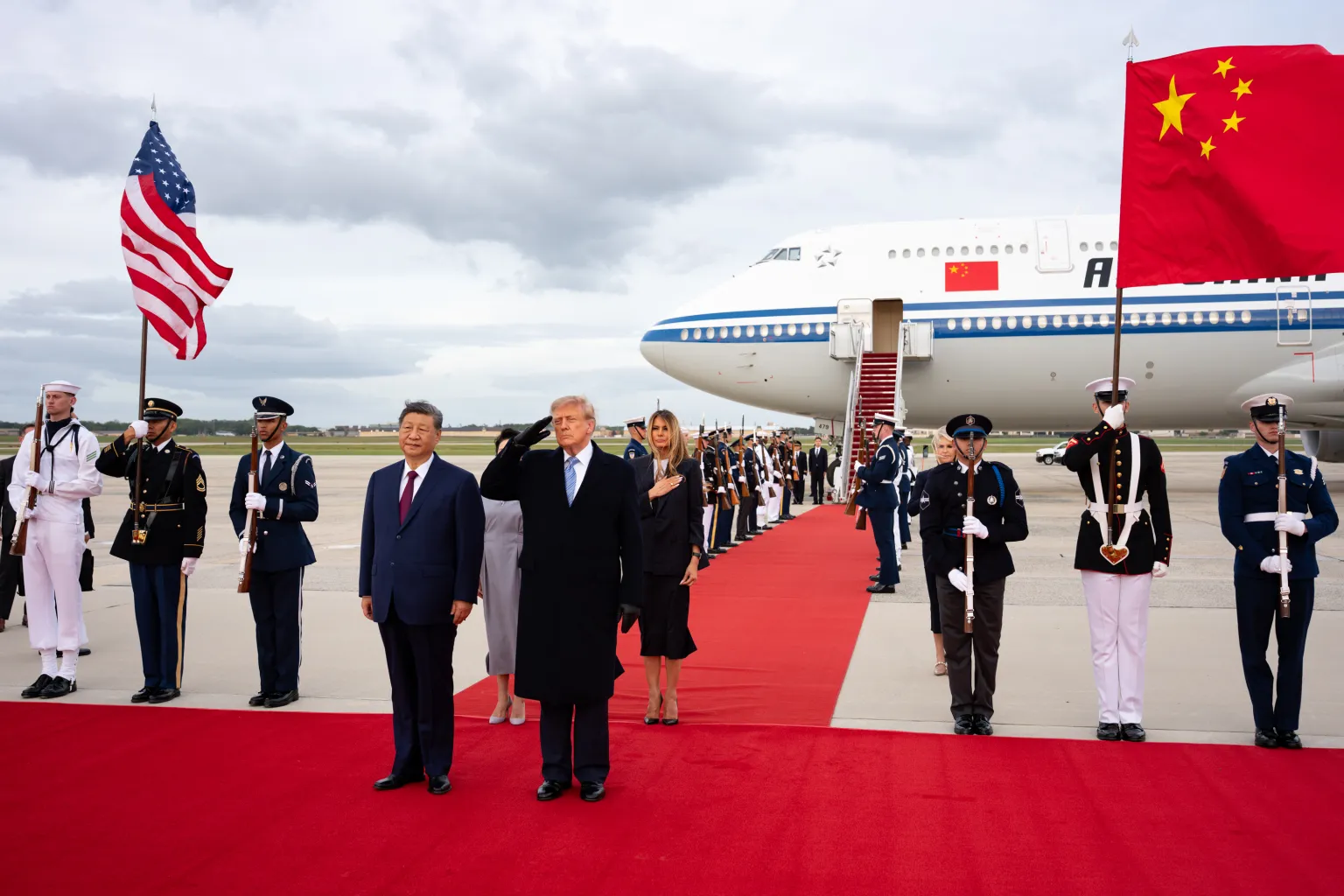
President Xi touched down at Joint Base Andrews, Washington D.C., on September 23, 2026 for his first state visit to the U.S. in over a decade. He was greeted personally by President Trump, a courtesy that has not been extended to any foreign leader since Kennedy welcomed Harold Macmillan in 1962, papal visits aside. President Xi was welcomed with a flyover by two B-1 bombers and a 30m red carpet. He stayed at the iconic Waldorf Astoria during his visit. Both leaders held a bilateral meeting on 24 September at the White House, which is discussed below. This was followed by a state dinner which began with President Trump presenting President Xi and Madame Peng with a custom-made statue of a bald eagle, national symbol of the U.S. which represents the free spirit of America. The dinner also included tech giants, like Elon Musk, Jensen Huang, Jeff Bezos among others.
On 25 September, President Trump and the First Lady hosted their Chinese counterparts for tea followed by a visit to the National Archives in recognition of the 250th anniversary of American Independence.
Setting the Stage
Xi’s visit was preceded by President Trump’s visit to Beijing, earlier this year in May. This visit produced a slew of agreements across various sectors and set the agenda for this visit. Treasury Secretary Scott Bessent and Chinese Vice Premier He Lifeng laid the foundation for this summit during their eight-hour marathon meeting on September 20 followed by an unscheduled meeting on September 23, 2026. This meeting identified the set of issues and agreements which could be finalised during the leader’s meeting. Against the backdrop of the Lindsey O. Graham Sanctioning Russia and Iran Act and ongoing conflicts around the world, this visit attracted considerable international attention.
AI: Building Guardrails for a New Frontier
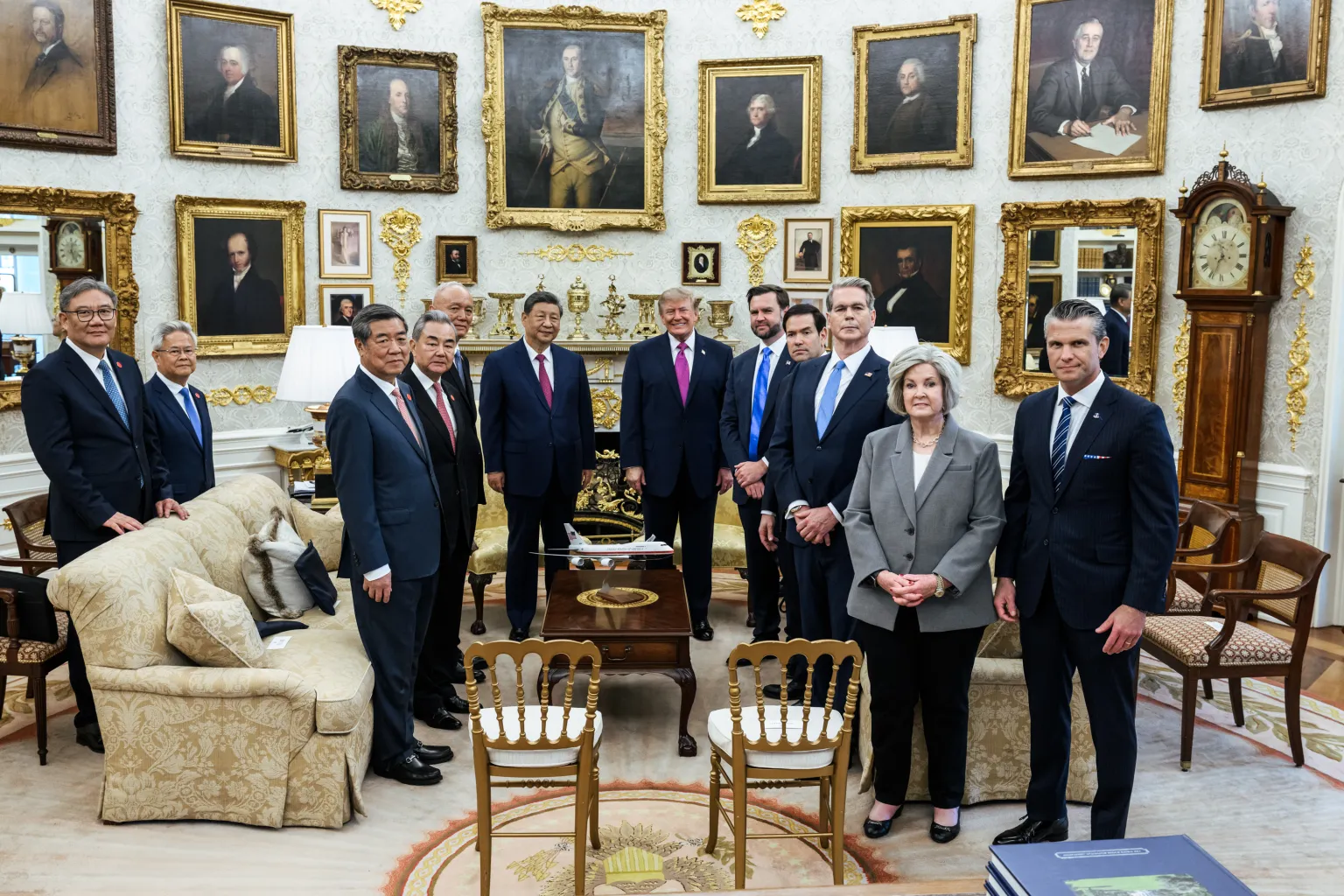
During their bilateral meeting, both leaders agreed on various key proposals and discussed several important issues. The two leaders agreed to establish U.S.-China AI (or Super Intelligence SI, which White House says both leaders have agreed to use) dialogue whose next meeting will take place in November, 2026. One important agreement in this area concerns establishing a “notification mechanism” for AI related incidents concerning national security. This mutual understanding will result in alerting the other country in case of any mishap and vice versa. This might work mostly as a military hotline, so as to avoid any miscommunication which could have global implications. Given President Trump’s insistence on not slowing down on AI despite several warnings from industry leaders, no major agreement was possible. However, President Xi stated in his address that AI must be kept under human control and should be used for humanitarian purposes.
Trade: From Tariffs to Managed Commerce
On trade, both sides agreed to operationalise ‘U.S.-China Board of Trade’ and ‘U.S.-China Board of Investment’, which were established during Trump’s May visit. Under the Board of Trade, both sides identified $30 billion worth of non-sensitive goods that qualify for tariff reduction. For U.S. exports, this includes primarily agricultural goods, fish, wood products and cosmetics. For Chinese exports, this includes consumer products like toys, small appliances and decorative items. It will also establish a working group to address market access barriers in the agricultural sector. Further, the Board of Investment is tasked with providing potential investment opportunities in both countries and to establish a mechanism to address barriers in these prospects. Additionally, on the trade front, China agreed to import at least 10 million metric tons of coal from the United States in 2027 and in 2028. Both leaders also agreed to extend the economic trade truce (Busan Agreement) until 10 January, 2027.
Both sides also highlighted the close cooperation between their law-enforcement agencies to crack multiple cases involving New Psychoactive substances (NPS) and fentanyl precursor chemicals, which resulted in multiple arrests.
Taiwan: The Enduring Fault Line
The main bottleneck surrounding U.S.-China relations, Taiwan, also featured during the discussions. The importance of this issue is evident by the reports of China threatening to cancel the summit if the U.S. moves forward with its pending $14 billion arms sale package to Taiwan. The Chinese Foreign Ministry readout of the talks clearly mentions President Xi’s stressing the importance of national unification and expecting the U.S. to adhere to the correct position of opposing “Taiwan independence”. There are two main takeaways from this. First, for China, Taiwan has always been a red line and the strong foundation of U.S.-China bilateral cooperation is directly dependent on this variable. Secondly, the use of the word “adhere” is quite significant here as it indicates that China believes that the U.S. already supports its position on Taiwan and therefore, it expects America to continue to do so. Xi reiterated avoiding the Thucydides trap and continuing the healthy competition between the two nations.
Beyond the Bilateral Agenda
The two leaders also exchanged their views on Russia, North Korea and the Middle East crisis, particularly the Iran war where both leaders agreed that Iran cannot have a nuclear weapon and no country or institution can impose tolls on international waterways. Both leaders also recalled their historic cooperation during World War II where they fought side by side. Additionally, President Trump also gave President Xi a tour of the newly built South Lawn Helipad and Marine One, the presidential helicopter.
Clearly, the winner of this summit had to be the Atlanta Zoo, which will receive two giant pandas leased by China, another example of the famous Chinese ‘panda diplomacy’.
Conclusion
While it can be argued that the summit could not produce consensus on any of the major geopolitical issues, we cannot consider it a total failure. Any meeting between the leaders of the world’s two leading economies is always a positive sign for stability in this multipolar world, as it provides an avenue to at least discuss and manage the major contentious issues between them, which can contribute to a common understanding between the two countries. Moving forward, both leaders are expected to meet each other two more times this year: first, in November at the Asia-Pacific Economic Cooperation (APEC) summit in Shenzhen, China, and second, in December at the G20 Summit scheduled to be held at Trump National Doral Miami, Florida, U.S.
Sources
The White House. (September 25, 2026). Fact Sheet: President Donald J. Trump Advances a Fair and Reciprocal Relationship with China While Hosting Historic State Visit. The White House. www.whitehouse.gov/fact-sheets/2026/09/fact-sheet-president-donald-j-trump-advances-a-fair-and-reciprocal-relationship-with-china-while-hosting-historic-state-visit/
The White House. (September 25, 2026). President Trump, First Lady Conclude Historic China State Visit. The White House. www.whitehouse.gov/releases/2026/09/president-trump-first-lady-conclude-historic-china-state-visit/
Ministry of Foreign Affairs of the People’s Republic of China. (September 25, 2026). President Xi Jinping Holds Talks with U.S. President Donald J. Trump. Ministry of Foreign Affairs of the People’s Republic of China.
Ministry of Foreign Affairs of the People’s Republic of China. (September 26, 2026). China and the United States Reach Eight Deliverables and Understandings. Ministry of Foreign Affairs of the People’s Republic of China. www.fmprc.gov.cn/eng/xw/zyxw/202609/t20260926_12031663.html
Global Times. (September 26, 2026). China, US reach consensus on eight outcomes in Xi's visit; historic visit enriches connotation of a constructive China-US relationship of strategic stability. Global Times. www.globaltimes.cn/page/202609/1371382.shtml
Associated Press. (September 27, 2026). 7 takeaways from Xi's state visit with Trump in Washington. Associated Press. apnews.com/article/trump-xi-visit-china-trade-ai-takeaways
Reuters. (September 23, 2026). US, China agree to extend trade truce by two months, work on bigger deal, Bessent says. Reuters. Reuters article
Council on Foreign Relations. (September 27, 2026). The Limits of Trump and Xi’s Photo-Op Summit. Council on Foreign Relations. www.cfr.org/articles/the-limits-of-trump-and-xis-photo-op-summit
Continue reading
 International Relations
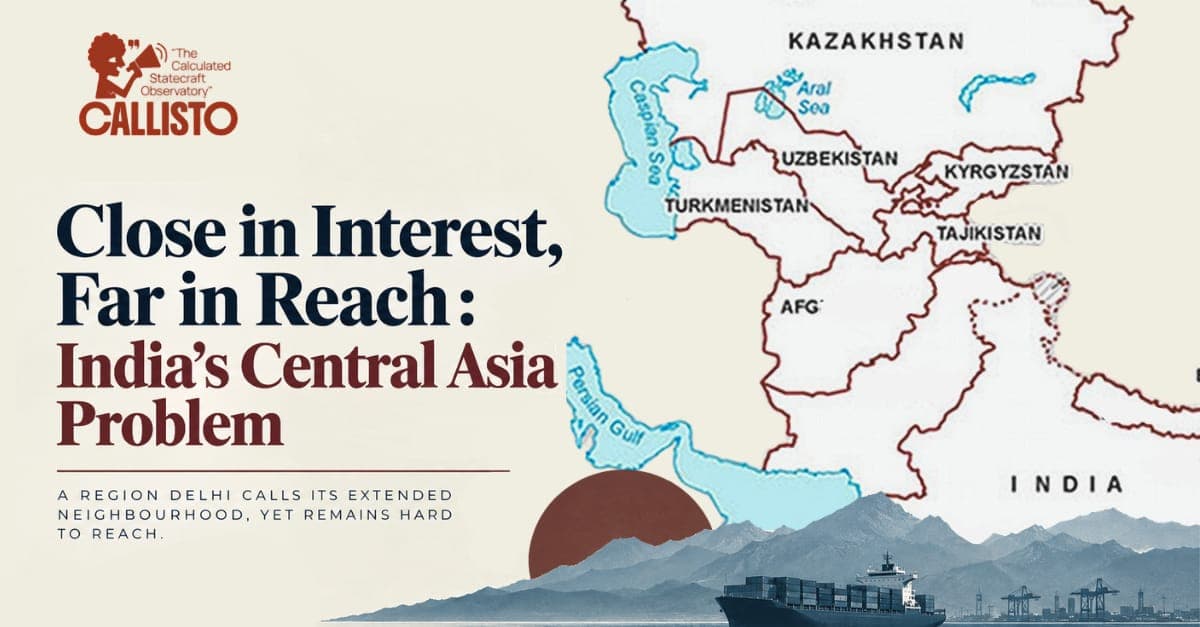
Close in Interest , Far in Reach : India's Central Asia Problem
17 October 2026
A region Delhi calls its extended neighborhood matters for energy, security and diplomacy, yet it remains hard to reach.
 International Relations
WHO OWNS THE ARCTIC? THE GREENLAND QUESTION
3 October 2026
Greenland’s strategic importance is reshaping Arctic security, but the new U.S.–Denmark–Greenland defence agreement raises questions beyond military cooperation. As Washington expands its presence, Greenland’s sovereignty, self-determination, environment, economy, and cultural priorities remain central to understanding the Arctic’s changing geopolitical landscape.
 International Relations
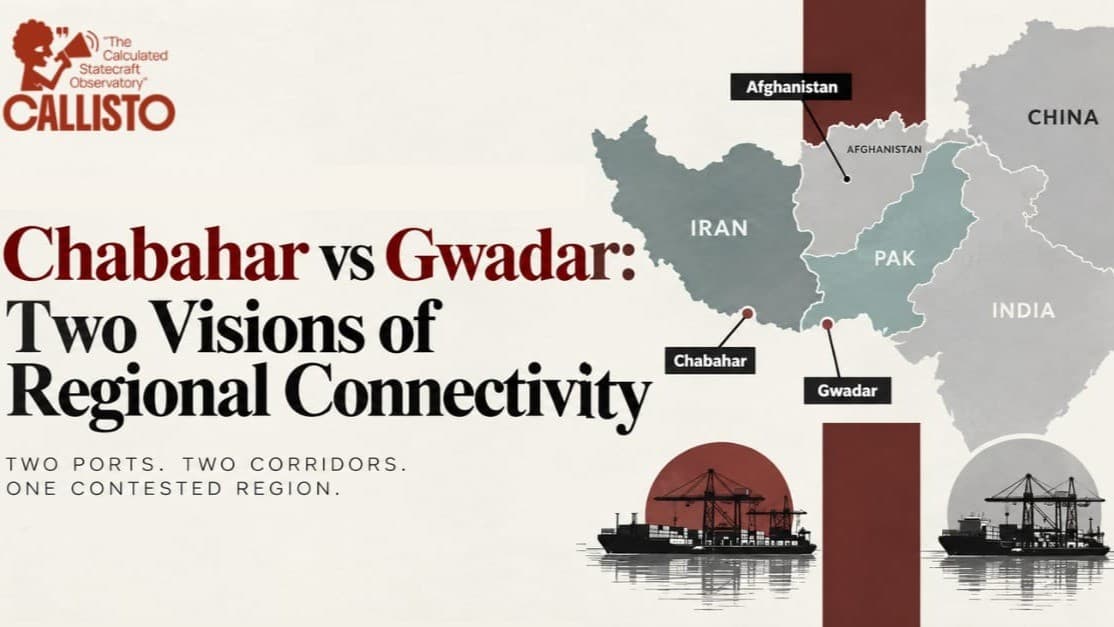
CHABAHAR VS GWADAR: TWO VISIONS OF REGIONAL CONNECTIVITY
24 September 2026
Chabahar and Gwadar embody rival visions of regional connectivity. India’s Chabahar offers a Pakistan-bypass route to Afghanistan and Central Asia via INSTC, while China’s Gwadar under CPEC aims for strategic depth but faces Baloch insurgency and chokepoint risks.
0 likes · 0 comments
Comments
No comments yet.
Your comment