
WHO OWNS THE ARCTIC? THE GREENLAND QUESTION
Hey Readers,
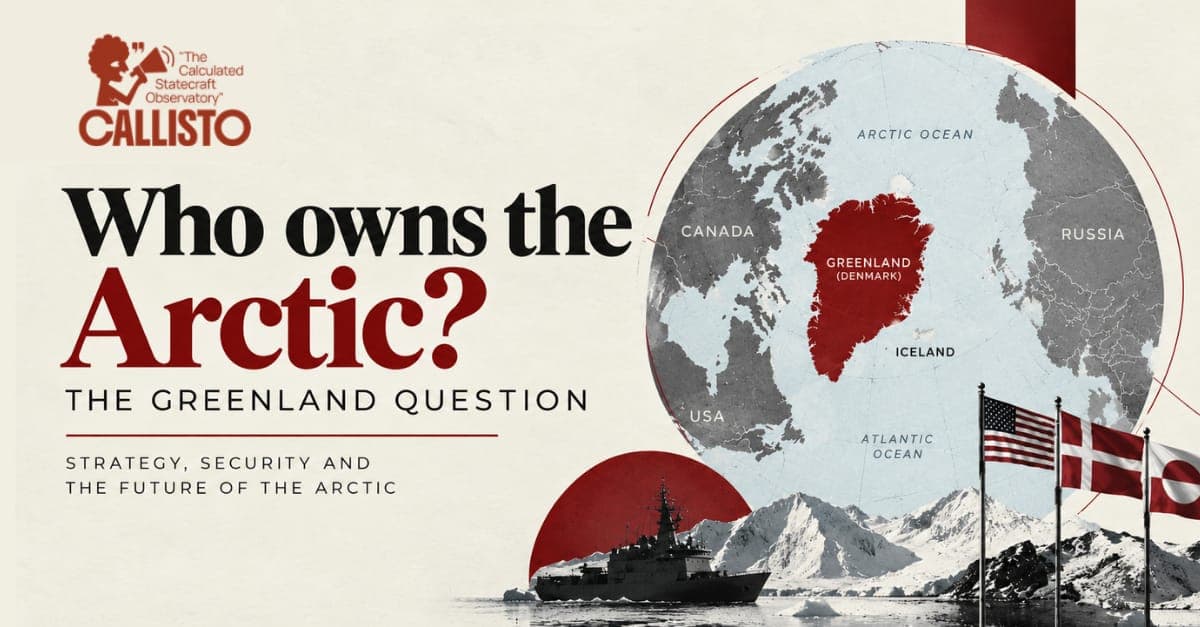
Welcome Back. On 22 September, an agreement was signed between the government of the United States of America, the kingdom of Denmark together with the government of Greenland to amend and supplement the agreement of 27th of April 1951 which is pursuant to the North Atlantic Treaty between the government of the USA and the kingdom of Denmark on the Defense of Greenland (1951 Defense agreement), including all relevant subsequent agreements. Since the announcement of this accord has attracted two narratives across the globe. One being, “the permanent control” by the US and second being “sovereignty not moved” from Denmark and Greenland’s side (The White House, 2026). The narrative lays out the stories of both sides, tests them against what the agreement actually does and asks what should happen before the deal takes effect (Joy, 2026).
From 1951 to 2026: What Actually Changed?
The new agreement amends and supplements 1951 US-Denmark Defence Agreement on Greenland, including the 2004 Igaliku Agreement. The major change is that Greenland itself is the signatory of the agreement rather than being represented by Denmark (The White House, 2026). The agreement also represented the Greenlandic people as a people under international law with a right to self-determination (The White House, 2026).
Some provisions of the agreement are:
The agreement does not have any end date and it can be changed only by mutual consent (The White House, 2026).
The US can modernize and expand Pituffik Space Base and set up new Defense Areas at Narsarsuaq and Mestersvig (The White House, 2026).
Another is access to movement, the US gets free access and movement between its Defense Areas by land, air and sea (The White House, 2026).
Non- NATO parties are barred from establishing military installations or even having a presence in Greenland (The White House, 2026).
These efforts suggest that there has been persistent effort in institutionalising and expanding an already existing security partnership by the U.S.
Significance of Greenland in Geopolitics
Geographically, Greenland is located between North America and Europe and occupies a critical position in the Arctic and North Atlantic. Its location makes it useful for monitoring missile trajectories, tracking objects in space and supporting North Atlantic defence. On the other hand, the geographical extent, the human scale of the region is less. This contrast matters since, the decisions involving military infrastructure are made in a territory with a very small population, distinctive cultural traditions and extensive reliance on hunting and fishing (United States Space Force, n.d.). In the new agreement there are explicit references to the Greenlandic people and their activities, meanwhile also ensuring that the benefit of U.S. contracts goes to Greenlandic business to the maximum extent possible.
The agreement also links Arctic security to broader NATO cooperation which means under this agreement Greenland is treated as a wider Arctic security architecture.
The Unresolved Question: Security for Whom, and on Whose Terms?
The agreement talks about the expanded military capability for Washington and Copenhagen, that can strengthen deterrence and surveillance in a rapidly changing Arctic. But, for Greenland military capability is not the only aspect rather other aspects of security as well. The agreement talks about the Greenlandic people, their culture, economic protection and environmental protection (The White House, 2026).
This, thus, gives rise to a practical challenge, that is, how should strategic priorities be resolved with local democratic control?
One of the ways for this is to treat the agreement’s consultation more in consequential terms rather than through procedural formalities. The agreement also provides the existing framework for a Permanent Committee to discuss U.S. military action and also provide consultation whenever required. Thus, both the parties can build their relationship on this by publishing regular assessments covering:
Environmental Impact
Local employment
Infrastructure and economic benefits
Effects on hunting, fishing and settlements
Greenlandic people’s participation concerning new facilities
There are some of these aspects covered in the agreement like Greenlandic participation, environmental protection and employment and so on. Therefore, the real test is not how the new military infrastructure is built but rather how effectively Greenlanders participate in this (The White House, 2026).
Closing Question
In contemporary geopolitics, the Arctic has emerged as a strategically important point. How should Greenland balance the security value of its geographical location with prioritising political, economic and cultural aspects?
Sources
Government of Denmark. (2026, September 22). Agreement between Greenland, Denmark and the United States. Prime Minister’s Office. https://stm.dk/en/press/press-releases/agreement-between-greenland-denmark-and-the-united-states
The White House. (2026, September). Agreement between the Government of the United States of America and the Government of the Kingdom of Denmark, together with the Government of Greenland, to amend and supplement the Agreement of 27 April 1951 relating to the Defense of Greenland. https://www.whitehouse.gov/briefings-statements/2026/09/agreement-between-the-government-of-the-united-states-of-america-and-the-government-of-the-kingdom-of-denmark-together-with-the-government-of-greenland-to-amend-and-supplement-the-agreement-of-27-apri/
Joy, A. P. (2026, September 19). US and Denmark describe the new Greenland deal in strikingly different terms. The Week. https://www.theweek.in/news/world/2026/09/19/us-and-denmark-describe-the-new-greenland-deal-in-strikingly-different-terms.html
United States Space Force. (n.d.). 12th Space Warning Squadron. U.S. Department of the Air Force. https://www.buckley.spaceforce.mil/About-Us/Fact-Sheets/Display/Article/2291701/12th-space-warning-squadron/
Continue reading
 International Relations
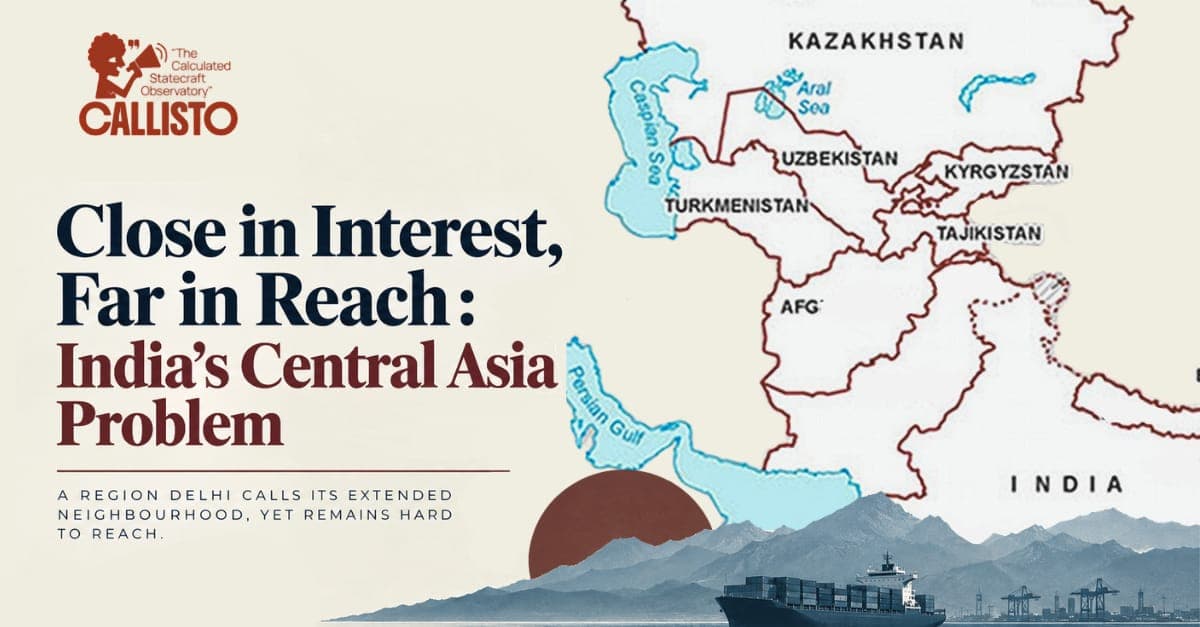
Close in Interest , Far in Reach : India's Central Asia Problem
17 October 2026
A region Delhi calls its extended neighborhood matters for energy, security and diplomacy, yet it remains hard to reach.
 International Relations
Trump-Xi Summit: Navigating a New Cold War
10 October 2026
Trade relations of the commodity of AI tech are analyzed through the Trump-Xi Summit in the context of the changing dynamics of U.S.-China relationship and Taiwan as a site of importance in this.
 International Relations
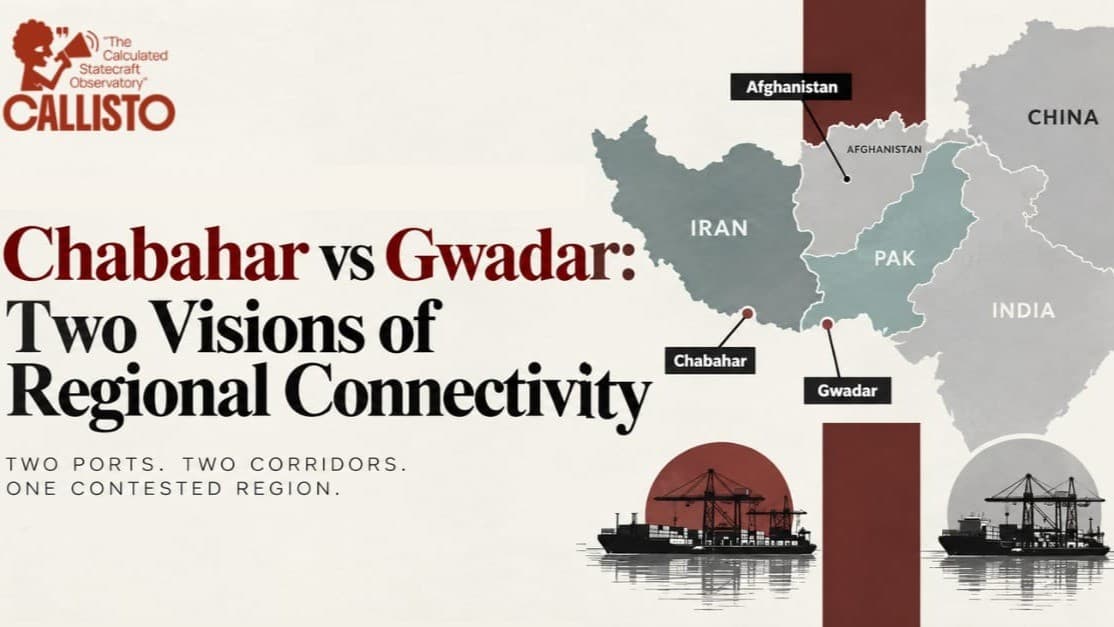
CHABAHAR VS GWADAR: TWO VISIONS OF REGIONAL CONNECTIVITY
24 September 2026
Chabahar and Gwadar embody rival visions of regional connectivity. India’s Chabahar offers a Pakistan-bypass route to Afghanistan and Central Asia via INSTC, while China’s Gwadar under CPEC aims for strategic depth but faces Baloch insurgency and chokepoint risks.
0 likes · 0 comments
Comments
No comments yet.
Your comment