
The Iron Triangle: China's Maritime Expansion in the South China Sea
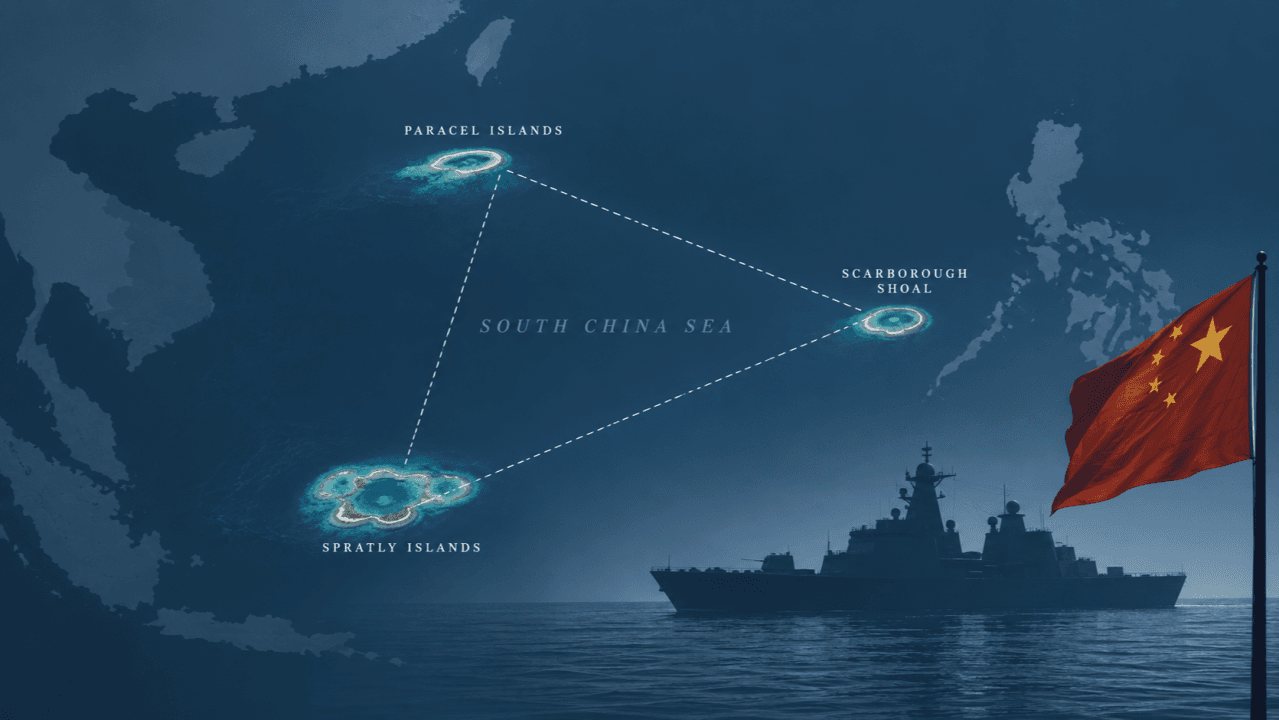
The South China Sea has been a conflicted zone for decades, and with every passing day the complications in the region increase. The central question regarding this region has been who claims to control the region, but in the current geopolitical scenario the more important question is who can keep up their presence until it becomes permanent. Since the past decade China has established its presence with industrialisation in the Paracels, the Spratly island and looks to consolidate its control of the Scarborough Shoals. And in 2026, it stopped looking like expansion and started to appear like administration.
Decoding the ‘Iron Triangle’
The South China sea consists of several coral islands across the region, and mainly the three islands the Paracel island, Spratly island and Scarborough Shoal forms a strategic triangular formation which Beijing seeks to control. This region would allow China to consolidate a strong control over the shipping lanes, fishing economy, natural resources, as well as maintain a strong military presence near the neighbouring countries like Philippines and Vietnam.
Since 1974, Beijing has established its control over the Paracel island, where it has built up major runways, a helipad and a deepwater harbour. These are clear indicators of militarisation, and explains that these are no longer just mere PLA outposts, but part of an integrated defence network, capable of countering any sophisticated attacks. These Paracel islands thus acts as an operational extension of the PLA based on Hainan island posing threat to Vietnam and even Taiwan. The Paracel island development is a fine example of how infrastructure converts into permanence.
The Spratly island holds a different context, as Beijing is not the only controller which precisely makes it more instructive. Philippines, Vietnam, Malaysia and Taiwan hold their positions in this part as well. But Beijing’s rapid military-grade infrastructural development makes the contest in the region irrelevant. The Spratly island demonstrates Beijing’s strategic consolidation even in the close presence of opponents.
The last point of the triangle, the Scarborough Shoal or the Hungyan Dao as China refers to, is an active issue of contention between Beijing and Manila. This zone has been a highly contested zone between the Chinese Coast Guards (CCG) and Filipino navy and even includes civilian fishermen in the contest. While Beijing seeks to complete the triangle, Manila seeks to expand its EEZ using the UNCLOS 2016 arbitration and through diplomatic channels. But Beijing recently made a new move by issuing a regulation approved by the State Council, Management Measure for the Hungyan Dao National Natural Reserve. This regulation establishes control zones, enforcement authorities, moreover giving a legal designation to a zone which is being internationally contested for a decade now. This takes away the relevance of Manila’s legal claims over the island, as Beijing exploits this grey-zone dispute.
A New Dimension: Regulatory Sovereignty
The case of Scarborough Shoal is a new feature of the South China Sea contest. The issue, approved by the apex administrative body of Beijing, gives rise to concern that it controls a disputed zone as though sovereignty was never a question. The region, defined as a natural reserve, now requires permits from Chinese authorities and is under exclusive control of the CCG for its enforcement. However, this cannot be contested as a security question but as a diplomatic and legal one, making the dispute resolution a slower one and a hard case to create diplomatic support against the issue. This move becomes crucial as it would be difficult process to negotiate away an administrative structure that insists on environment and not exclusively sovereignty. The Scarborough Shoal no longer remains a question of dispute, at least for Beijing, as it legally imposed sovereignty over this region making it appear as if it was always a part of it. Beijing has found an effective mechanism of control that is framed by legality and environmentalism.
The Response From the Neighbours
Beijing has actively pushed its strategic policies over the years, compelling other regional neighbours like the Philippines and Vietnam to respond in similar fashion. It is a temptation, rather a compelling situation for them to respond presence with presence. There is frequent conflict between the CCGs and other naval agencies of the regional countries, however these states fail to note Beijing’s strategy. Beijing never relied on heavy presence of naval patrolling, rather relied on sustaining low-intensity presence than any other contestant would do, and it utilises civilian boats most likely the fishing boats and now through administrative registrations.
In order to counter balance Chinese advancement, the regional players need to change their strategic measures from deterrence to endurance based infrastructure. The Philippines, backed by the US, uses constant patrol vessels in the region and even US aircraft carriers in the region. Manila’s continued use of UNCLOS mechanisms and coordination among ASEAN members remains a necessary aspect, but no longer sufficient enough. Regional states require stronger framework and joint mechanisms for transparency demands on enforcement powers and cross-checking Chinese claimed environmental zones over contested waters, and rapid infrastructural development to counterbalance Chinese defence networks.
Conclusion
The South China Sea contest no longer remains contested over claims, but increasingly extends to implementation of strategic measures. It is now about who can maintain their presence and institutionalise their presence. The three points constructing the Iron Triangle — the Paracel Island, Spratlys and the Scarborough Shoal, represents the strategic processes of consolidation, strategic infrastructure and institutionalisation to secure strategic maritime control in the region. The formation of this triangle represents a broader system which includes naval power, the fishing economy, and administrative regulation each reinforcing one another. However, it is necessary for the regional states to develop counter measures against this buildup of Beijing for the continuation of a secure democratic environment, and preventing resources from falling under the control of a single state. Thus the future of the region would be determined not by the first shots, rather who maintains a long-sustaining presence in the region.
Sources
Asia Maritime Transparency Initiative. 92026, March 19. Antelope Reef could now be the largest island in the South China Sea. Centre for Strategic and International Studies.
https://amti.csis.org/antelope-reef-could-now-be-the-largest-island-in-the-south-china-sea/
Government of China. (2025, September 10). China to establish Hungyan Dao national nature reserve. http://english.scio.gov.cn/pressroom/2026-08/03/content_118630866.html
Manila Bulletin. (2026, August 17). PH warns China nears complete control of South China Sea “iron triangle”. https://mb.com.ph/2026/08/17/ph-warns-china-nears-complete-control-of-south-china-sea-iron-triangle
L., Jianing. (2026, August 2). China issues management rules for Hungyan Dao National Natural Reserve. State Council Information Centre.
http://english.scio.gov.cn/chinavoices/2026-08/02/content_118629662.html
The Maritime Executive. (2026, August 20). China rushes to complete Paracel Island militarization. https://maritime-executive.com/article/china-rushes-to-complete-paracel-island-militarization
Continue reading
 International Relations
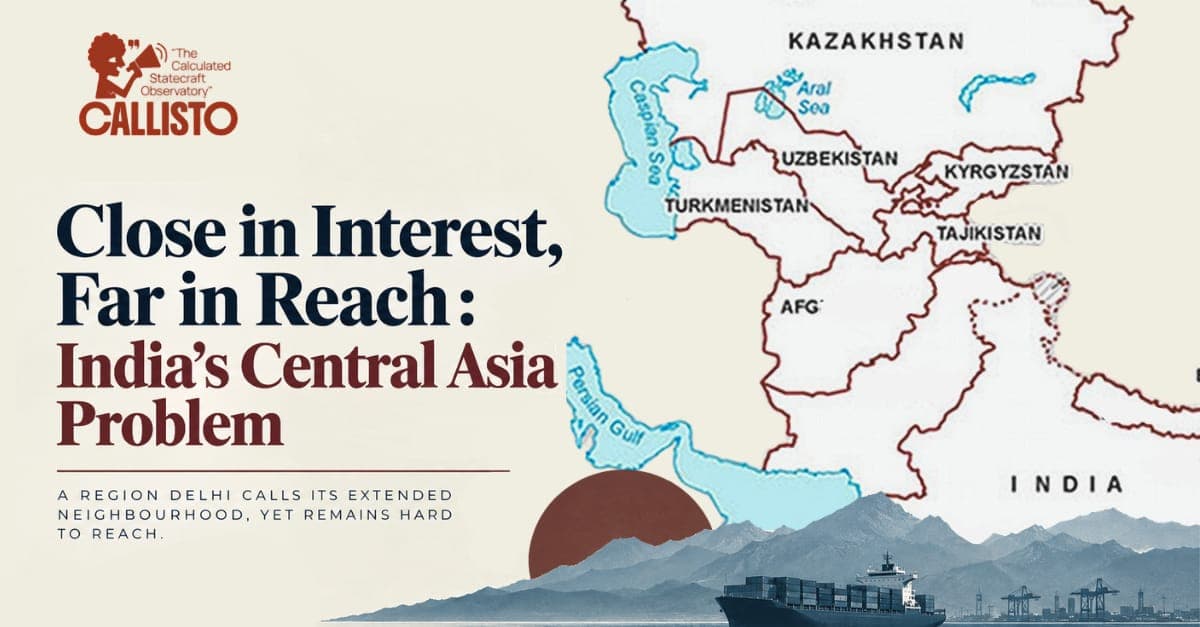
Close in Interest , Far in Reach : India's Central Asia Problem
17 October 2026
A region Delhi calls its extended neighborhood matters for energy, security and diplomacy, yet it remains hard to reach.
 International Relations
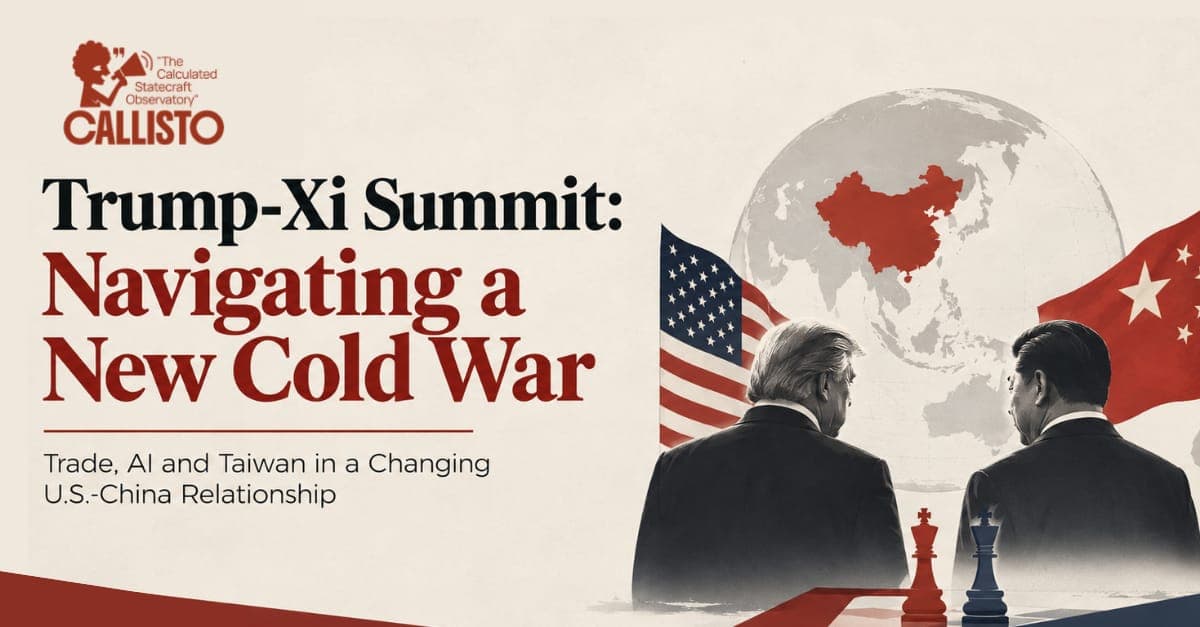
Trump-Xi Summit: Navigating a New Cold War
10 October 2026
Trade relations of the commodity of AI tech are analyzed through the Trump-Xi Summit in the context of the changing dynamics of U.S.-China relationship and Taiwan as a site of importance in this.
 International Relations
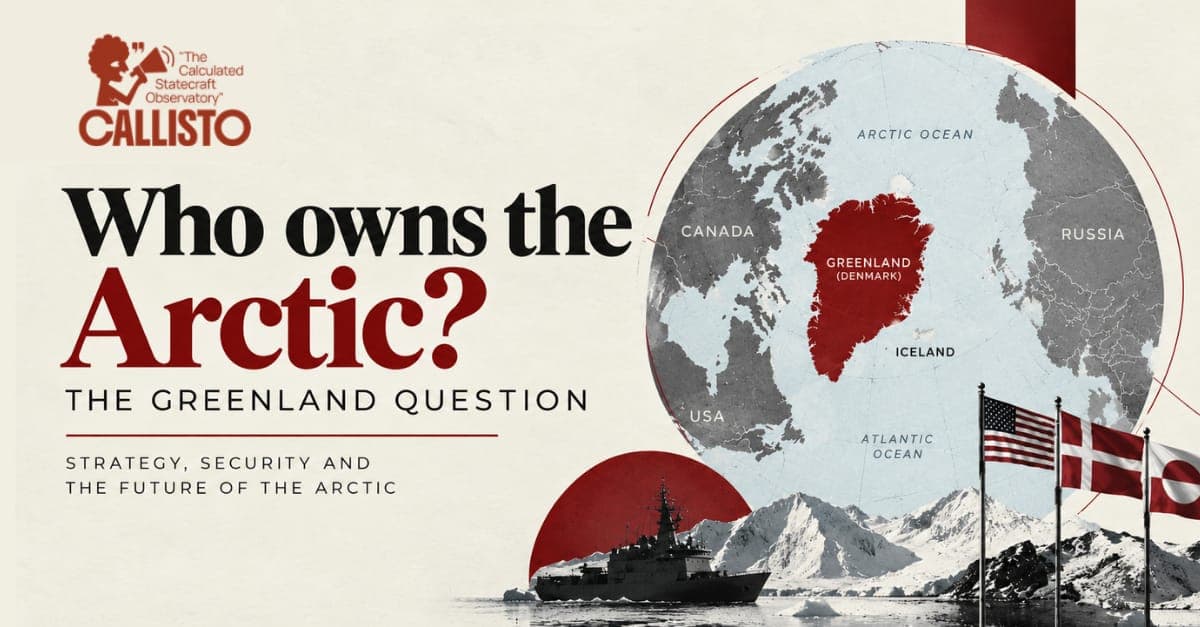
WHO OWNS THE ARCTIC? THE GREENLAND QUESTION
3 October 2026
Greenland’s strategic importance is reshaping Arctic security, but the new U.S.–Denmark–Greenland defence agreement raises questions beyond military cooperation. As Washington expands its presence, Greenland’s sovereignty, self-determination, environment, economy, and cultural priorities remain central to understanding the Arctic’s changing geopolitical landscape.
0 likes · 0 comments
Comments
No comments yet.
Your comment