
GLOBAL SOUTH AND THE CRISIS OF MULTILATERALISM
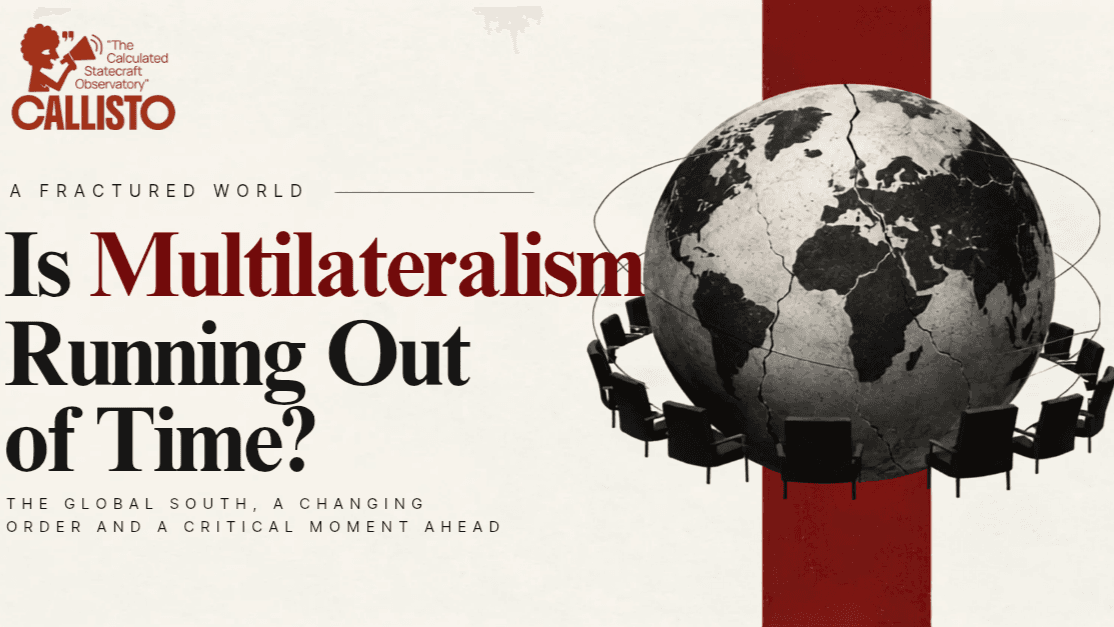
Multilateralism is a form of global governance wherein three or more countries are involved in decision making and influence the world politics. The multilateral era began around 19th century but was formalised in 20th century with establishment of United Nations in 1945. Almost a century later multilateralism is facing crisis both normatively (the belief and ideas) and objectively (real world effect and application). Global South being the staunch supporter and the beneficiary of this form of governance plays an important role in the current situation.
Multilateral order is weakening because of the diminishing influence and power of institutions like the UN and Bretton woods institutions, increasing unilateralism of developed countries and disinterest by Global South due to their underrepresentation. It is important to consider that the present problems like Climate change, terrorism etc require multilateral efforts as one single country or a group of countries cannot solve these problems, they require a cohesive effort by all the countries.
Why is Multilateralism Under Pressure?
Multilateralism is under pressure due to various interrelated causes.
Loss of Legitimacy and Representation: United Nations and other global institutions fail to represent the present world situation. UNSC still has only five permanent seats not representing the Global South. IMF voting share of BRICS countries remain disproportionately low even after their economic share. Brazil, Russia, India and China contribute more than 24% of the world's GDP but have only 13% of the voting power in the IMF, while four key European economies have 18%.
Rise of Minilateralism: Nations are shifting towards smaller, regional or issue-based coalition due to the inability of multilateral institutions to effectively address problems. This trend divides the global governance framework and weakens the universal principles of multilateralism.
Geopolitical Rivalries and Power Politics: New and old rivalries between nations hamper the output of Multilateral Institutions. The resurgence of rivalry among significant countries, such as the competition between the US and China, rivalry between India and Pakistan etc. has diminished collaboration in multilateral platforms, resulting in stalemates and exits from important treaties and organizations.
Global South and Multilateralism
The Global South is increasingly demanding for a fair multilateral world order with more representation and power to the underdeveloped and developing countries. Considering negligible changes in the world bodies they have adopted various other institutions like the BRICS, ASEAN and The African Union. These nations believe that modern world problems need cooperation but not at the cost of underrepresentation thus they have shifted their dependence from world bodies to regional institutions.
BRICS has emerged as the strongest and most stable alternative to the G-7 led world order. It has come out as a platform where Global South can discuss and find solution to their problems. New Development Bank established under it forms a steady source of financial help for member countries.
The Global South is investing its time, money and efforts in regional institutions, but it has not disbanded and delegitimised the world institutions. The countries time and again demand for a fair representation in important bodies like UNSC permanent seat with veto power.
India and Multilateralism
India has been historically supporting multilateral world order and portrays itself as a leader of Global South exemplified in its Non-Alignment Movement. India magnifies the collective voice of the Global South, emphasizing sovereignty, agency, and equal representation rather than a top-down leadership approach, and promoting collaboration over competition. Their scope is still small in comparison to China's infrastructure-led model, India's development cooperation initiatives from digital public infrastructure and renewable energy to vaccine diplomacy provide significant public goods and demonstrate alternate growth trajectories.
India is a proactive member of many multilateral and plurilateral institutions like BRICS and UN. In these institutions it always proposes for a better and cohesive world where Global South gets its due representation, advocating for projects like ‘AI for All ‘. India plays a distinctive position as an effective unifying force between the East and the West as well as between emerging and industrialized nations. India has established itself as a powerful global voice and a trustworthy partner in the G20 group. India has hosted three Voice of Global South Summits in an effort to strengthen its ties with the Global South.
However, the ability to convert engagement to growing influence and political preference on part of the leadership of the various south countries has been better played by China, which has not been obstructed by insufficient material resources. China has been skeptical of India’s leadership claims and has sought to contest it at multiple levels, even though both cooperate across certain multilateral formations like the BRICS and SCO. If India seeks to represent the collective interest of the Global South, it needs to show more evidence of inclusion of the south in its activities by investing more in deliverable results and not symbolic actions.
Conclusion
The global multilateralism crisis is shaped by several interrelated factors i.e. the inability of multilateral institutions to incorporate the present needs and situations especially the ones concerned with Global South countries, the underrepresentation of Global South, power competition between nations and disinterest by great powers. This has led to Global South countries shifting towards regional and mini lateral collaborations for finding a solution to their problems and for future developments, although this has not led to disinterest in multilateral institutions, they still demand a fairer more representative institution. Some of the major organisations that cater to their needs are BRICS, ASEAN and SCO. India plays an important role as the leader of Global South and is a staunch supporter of reforms in the multilateral institutions. India’s abilities are constrained by material investment and the influence of China in the region.
Sources
United Nations https://www.un.org/en/global-issues/multilateral-system
Jaldi, A. (2023, April). The crisis of multilateralism viewed from the Global South (Policy Paper No. PP-05/23). Policy Center for the New South https://www.policycenter.ma
Global South Policy Hub https://gsphub.org/publications/what-comes-next-for-the-global-south-and-the-multilateral-order
Heinrich Boll Stiftung New Delhi https://in.boell.org/en/2025/10/06/india-and-its-quest-leadership-global-south
Ministry of External Affairs https://www.mea.gov.in/lok-sabha?dtl/40522/question+3449+role+of+india+on+multilateral+forum
Continue reading
 International Relations
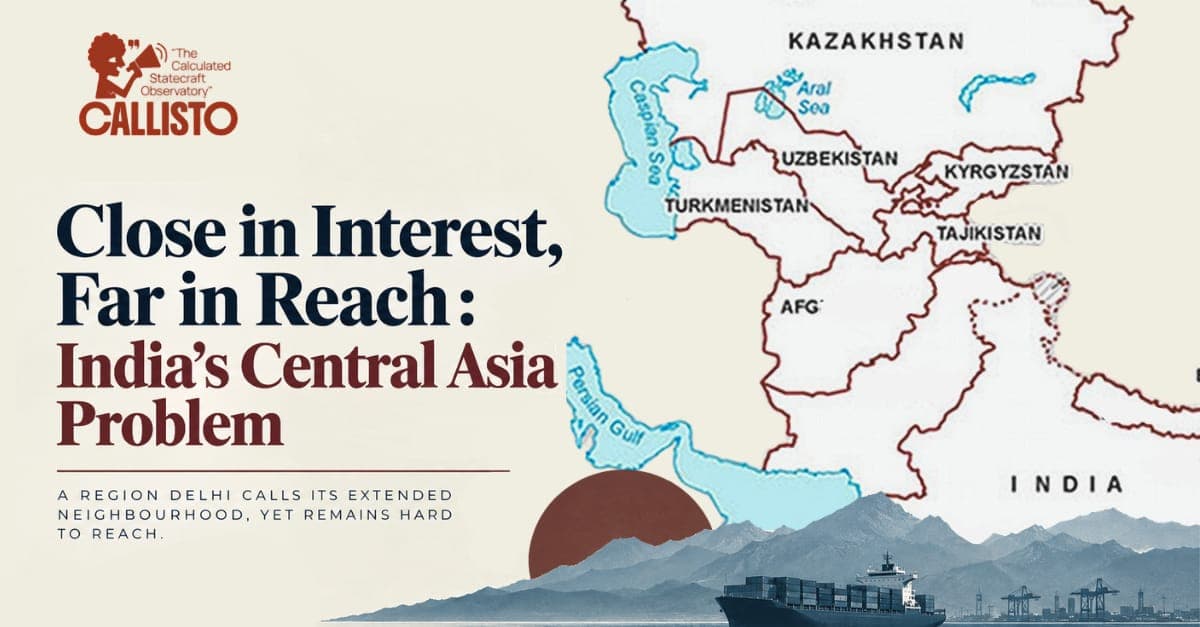
Close in Interest , Far in Reach : India's Central Asia Problem
17 October 2026
A region Delhi calls its extended neighborhood matters for energy, security and diplomacy, yet it remains hard to reach.
 International Relations
Trump-Xi Summit: Navigating a New Cold War
10 October 2026
Trade relations of the commodity of AI tech are analyzed through the Trump-Xi Summit in the context of the changing dynamics of U.S.-China relationship and Taiwan as a site of importance in this.
 International Relations
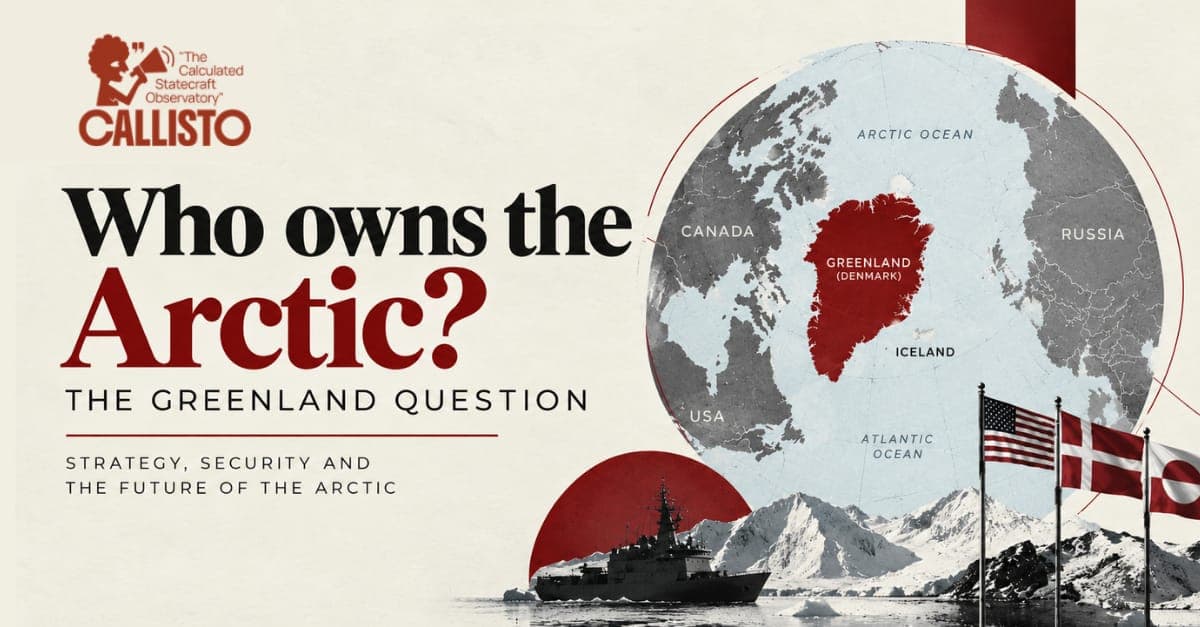
WHO OWNS THE ARCTIC? THE GREENLAND QUESTION
3 October 2026
Greenland’s strategic importance is reshaping Arctic security, but the new U.S.–Denmark–Greenland defence agreement raises questions beyond military cooperation. As Washington expands its presence, Greenland’s sovereignty, self-determination, environment, economy, and cultural priorities remain central to understanding the Arctic’s changing geopolitical landscape.
0 likes · 0 comments
Comments
No comments yet.
Your comment