
Rethinking the collegium system
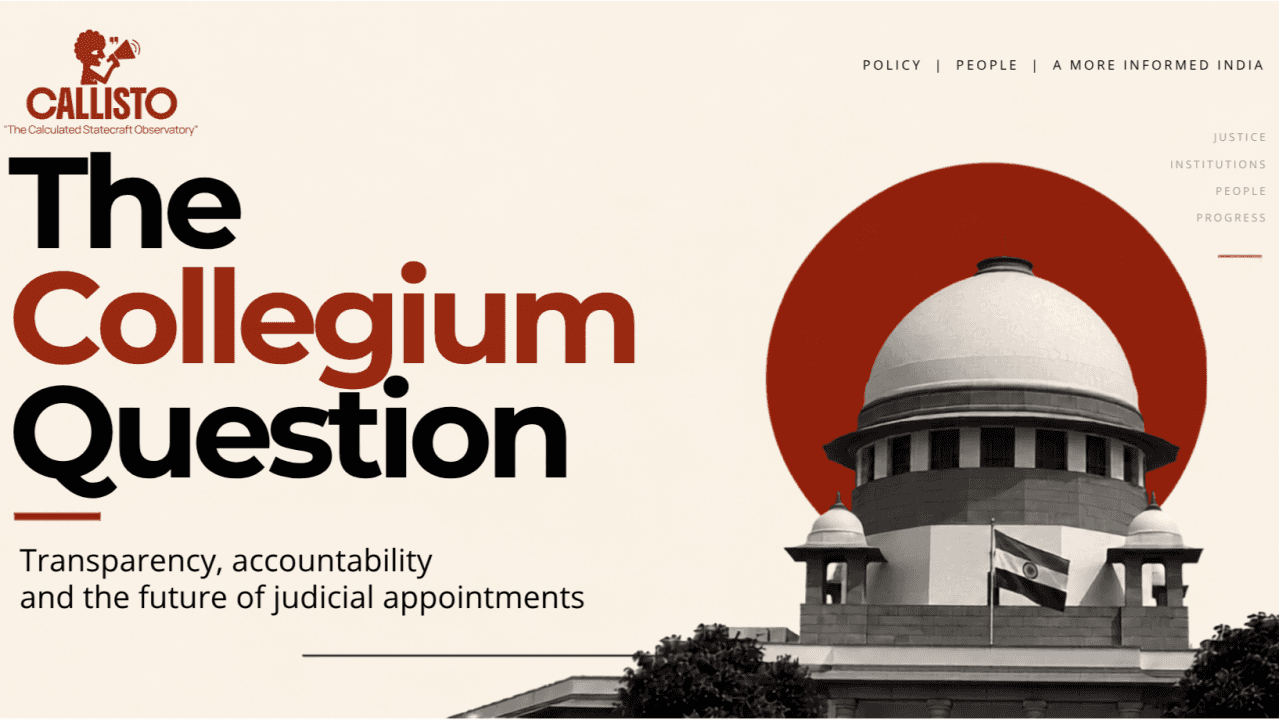
In a recent speech, Supreme Court judge Justice Ujjal Bhuyan talked about greater openness in the judicial system (LiveLaw, 2026). This statement resonated with the public of the country as well. The judiciary at times appears distant from the rest of the country with its procedures becoming more opaque. One prominent example is the collegium system.
What is the Collegium System?
The Collegium system is the process used to appoint judges in the Supreme Court and High Courts. The Supreme Court collegium is led by the Chief Justice of India (CJI) and consists of four senior most judges of the court. The High Court Collegium is led by the Chief Justice of the respective state and consists of two other senior most judges. The names are then sent to the government. If the collegium sends a name a second time after an objection, the government must make the appointment, this makes the collegium’s decision binding.
Long tussle between the Executive and Judiciary
The system has come in place after various court judgements and legislative acts. Let’s take a closer look at the history of the appointment of judges.
The legal tussle between the executive and judiciary over appointment of judges dates back to 1981. In SP Gupta v. Union of India (1981) famously called the First Judges Case upheld executive primacy in judicial appointment.
In 1993, in the Supreme Court Advocates-on-Record Association v. Union of India the First Judges Case judgement was overruled and established judicial primacy in appointments.
In 1998, in the Third Judges Case, the court expanded and formalised the collegium system.
An attempt was made by the government to replace the collegium system. The 99th Constitutional Amendment Act, 2014 and the National Judicial Appointments Commission Act, 2014 were enacted to replace the Collegium. The commission consisted of The Chief Justice of India as Chairperson, two senior-most Supreme Court judges, the Union Minister of Law and Justice and two eminent persons (chosen by a committee of the Prime Minister, Chief Justice and Leader of the Opposition). In October 2015, the Supreme Court struck down the constitutional amendment and the NJAC Act as unconstitutional. While no other legislative steps have been taken to alter the collegium system since then, several ministers have subsequently called for reforms in the judicial appointment system.
Drawbacks of the collegium system
The system has been questioned regarding its lack of transparency but several steps have been taken by the Supreme Court since 2025. The appointment process and details of High Courts recommendations made from 9 November 2022 to 5 May 2025 were made public by the Supreme Court on their website (Supreme Court of India, 2025b). Details like the name of the candidate, High Court concerned, Source, Date of Supreme Court Collegium recommendation, Date of notification by the Department of Justice, Date of appointment, Special category — SC/ST/OBC/Minority/Woman and whether the candidate is related to a sitting or retired Supreme Court/High Court judge.
Through the details published limited diversity was observed. The data published by the Supreme Court covering the period from 9 November 2022 to 5 May 2025 included 406 recommendations made by High Court Collegiums. Of these, 221 candidates were approved by the Supreme Court Collegium. Among the approved candidates, 34 were women, eight belonged to Scheduled Castes, seven to Scheduled Tribes and 32 to OBC communities. (Supreme Court of India, 2025a).
The same data showed that 13 of the candidates approved by the Supreme Court Collegium had specified familial relationships with sitting or retired High Court or Supreme Court judges (Supreme Court of India, 2025a).
While this does not directly connect the appointments to nepotism, it reiterates the need to make the process of choosing candidates more transparent.
There is limited public visibility into the criteria and framework used by the Collegium making it difficult for the public to keep track of the recommendations and appointments.
While details regarding the appointment of judges are becoming available on the Supreme Court’s official website, other steps that can be taken moving forward are to disclose the reasons for recommending a name, publish the exact framework that collegium uses to recommend names and publish year-on-year data regarding the diversity of the bench of High courts and the Supreme Court.
However, greater transparency does not mean making every decision public. It is important to distinguish exactly what to be made public and what needs to be kept confidential.
Appointment process in other countries
No two countries follow exactly the same process for judicial appointments, with each system shaped by its own constitutional, political and social context. In the United Kingdom, an independent selection commission makes recommendations which broadens the participation. South Africa has a Judicial Service Commission which conducts public interviews which creates greater accountability. Canada has an Independent Advisory Board to assess candidates.
While the selection process for no two countries can ever be the same because of the varying political and social conditions of the country, lessons for diversity and transparency can be taken from other countries.
There is no universally ideal model for judicial appointments, as every system involves a trade-off between judicial independence, democratic accountability, transparency and diversity. For India, the objective need not necessarily be to replace the Collegium, but to make the process more transparent and accountable while preserving judicial independence. Reducing unnecessary secrecy and increasing transparency in judicial appointments can strengthen public trust in the courts without compromising their independence.
Sources
Department of Justice, Government of India. (n.d.). Memorandum of procedure and information relating to judicial appointments and the National Judicial Appointments Commission. Government of India. https://www.doj.gov.in/
Department of Justice and Constitutional Development, South Africa. (n.d.). The Judicial Service Commission: Frequently asked questions. Government of South Africa. https://www.justice.gov.za/faq/faq-jsc.html
Government of Canada. (n.d.). Judicial appointments. Government of Canada. https://www.canada.ca/en/privy-council/topics/appointments/judicial.html
In re: Special Reference No. 1 of 1998, (1998) 7 SCC 739.
LiveLaw. (2026, August 1). By not giving reasons, collegium doing disservice to judges doing good work: Justice Ujjal Bhuyan. https://www.livelaw.in/top-stories/by-not-giving-reasons-collegium-doing-disservice-to-judges-doing-good-work-justice-ujjal-bhuyan-543905
S.P. Gupta v. Union of India, 1981 Supp. SCC 87.
Supreme Court Advocates-on-Record Association v. Union of India, (1993) 4 SCC 441.
Supreme Court Advocates-on-Record Association v. Union of India, (2015) 5 SCC 1.
Supreme Court of India. (2025, May 5). Details of proposals approved by the Supreme Court Collegium for appointments as High Court judges from November 9, 2022, to May 5, 2025. https://cdnbbsr.s3waas.gov.in/s3ec0490f1f4972d133619a60c30f3559e/uploads/2025/05/2025051927.pdf
Supreme Court of India. (2025, May 5). Press release dated May 5, 2025. https://www.sci.gov.in/press-release-dated-may-5-2025-2/
Supreme Court of India. (2025). Process of appointments to the High Courts. https://cdnbbsr.s3waas.gov.in/s3ec0490f1f4972d133619a60c30f3559e/uploads/2025/05/2025050587.pdf
Supreme Court of the United Kingdom. (n.d.). Appointment of justices. https://www.supremecourt.uk/appointments-of-justices
Continue reading
 Public Policy
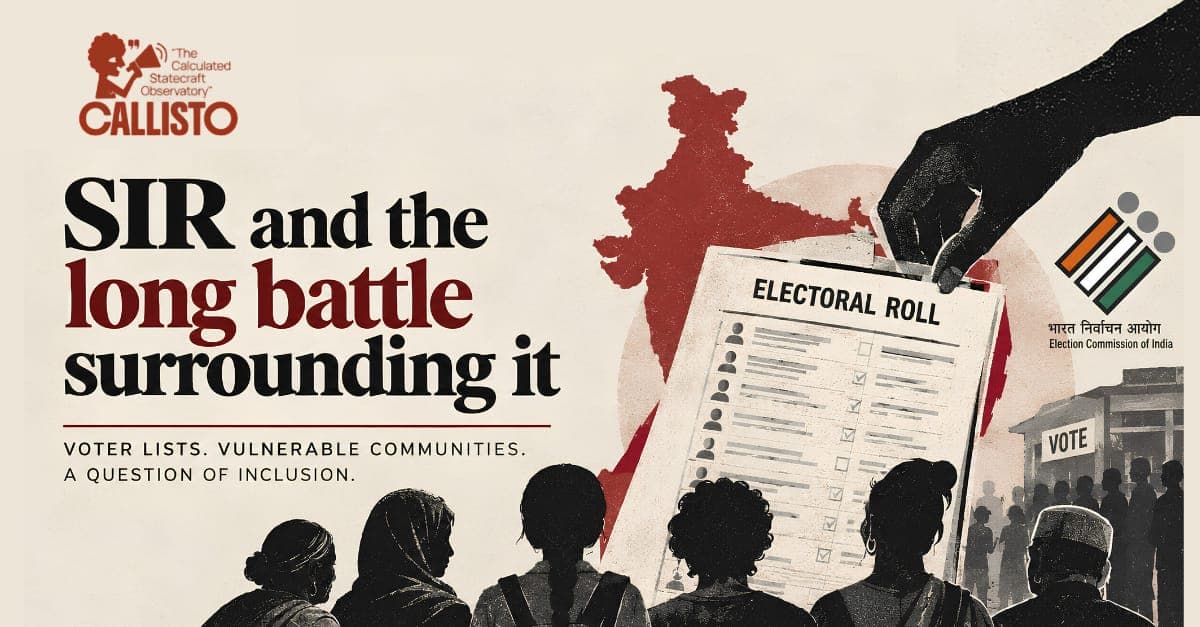
SIR and the Long Continuous Battle Surrounding it
11 October 2026
India’s Special Intensive Revision of electoral rolls has intensified debates over voter eligibility, democratic participation and the risk of wrongful exclusion. From women and transgender persons to religious minorities, the exercise raises urgent questions about electoral transparency, accountability and safeguards.
 Public Policy
BEYOND THE BORDER: WHY INDIA’S GLOF EARLY WARNING NEEDS A HIMALAYAN NEIGHBORHOOD
21 September 2026
India’s GLOF early-warning systems cover nearly 200 Himalayan lakes, yet border-crossing floods demand a shared Himalayan monitoring network. Transboundary data sharing and real-time alerts are essential, as climate risks ignore national boundaries.
 Public Policy
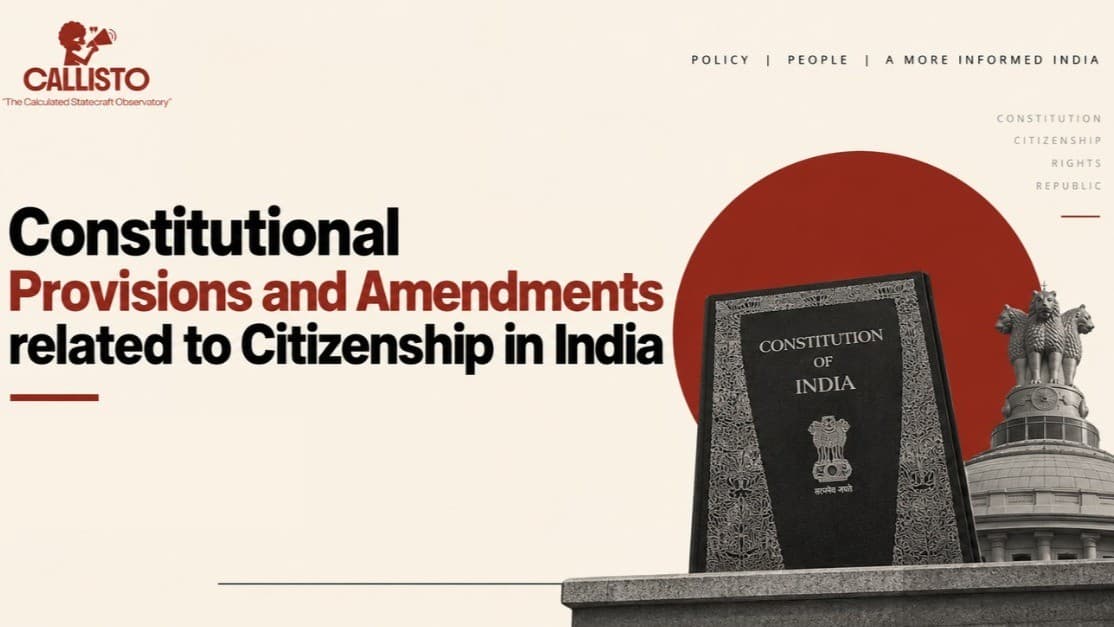
CONSTITUTIONAL PROVISIONS AND AMENDMENTS RELATED TO CITIZENSHIP IN INDIA
14 September 2026
India's citizenship provisions, classifications and the history of amendments in the context of a recent protests in Manipur for NRC and the row over SIR name deletions.
0 likes · 0 comments
Comments
No comments yet.
Your comment