
DELHI 2047
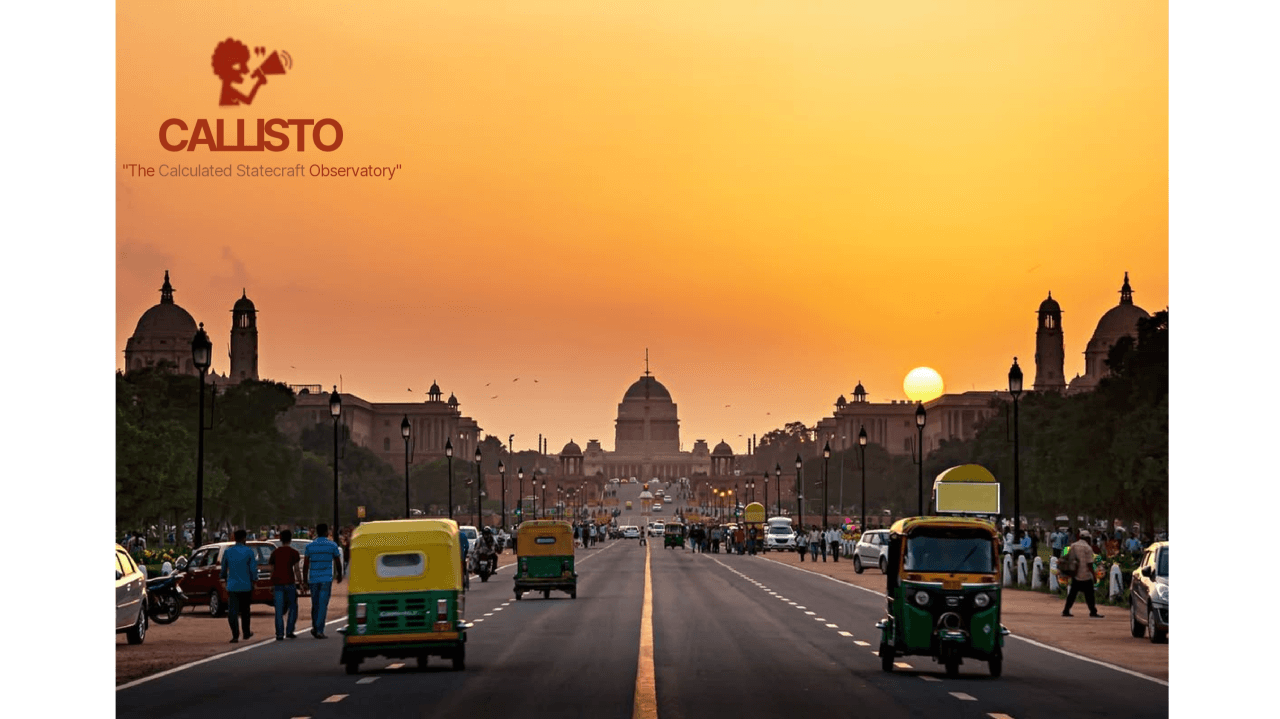
Delhi’s skyline has witnessed the rise and fall of empires and eras since time immemorial, but the city’s spirit of endurance has been a constant. So at what point does a city outgrow the plans meant to contain it ?
Every morning a metro arrives at a station somewhere in Delhi and spills hundreds of commuters onto streets that were never meant for the 21st century. The narrow lanes are riddled with aerial cabling, the avenues are choked with e-rickshaws and hawkers and the honking traffic stretches across potholed roads. That same morning also sees the residents of Greater Kailash walk their perfectly groomed dogs with dog handlers across lush green lawns and orderly streets. That is the national capital for you. The Delhi most people live in is sort of a makeshift city, over-crowded and constantly reinventing itself. However, the Master Plan for Delhi 2047 (MPD-2047) envisions a different Delhi. A Delhi that will be formulated not by building a new city but by rewiring the existing one.
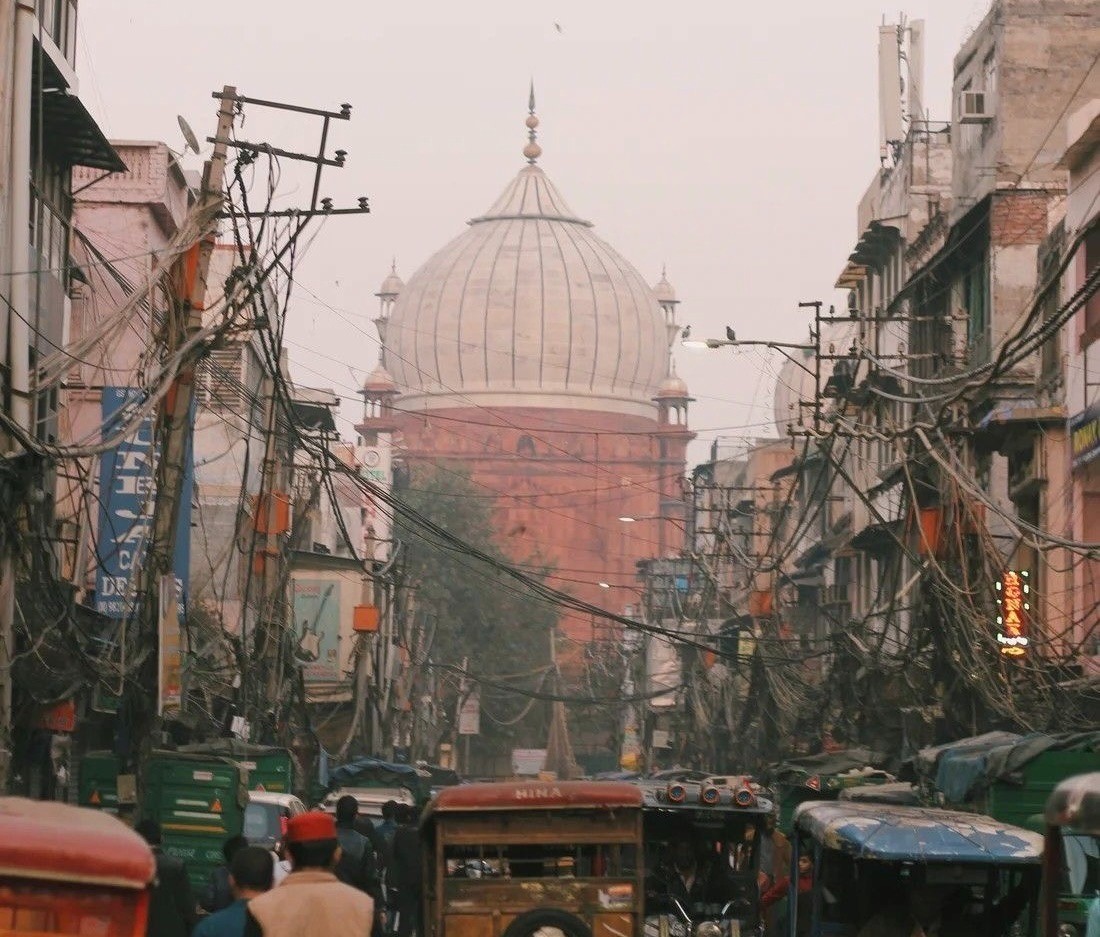
Delhi’s growth over the years has been phenomenal by any measure. Before independence, the city had a population of less than a crore. In 2011 that number snowballed to 16.7 million and today it’s closer to 23 million. Planners expect it to touch 32 million by 2047 which is about the population of a mid-sized country squeezed into a single city. A city this big has never lacked master plans , only mastery over them.
The first Master Plan of 1962 planned a city of tidy zones and green belts but it lacked strict checks against haphazard construction. Private land uses were grandfathered in regardless of the new zoning laws. Moreover disaster management was also absent from the entire planning set-up. The second plan in 2001 tried to accommodate Delhi with the boom that was followed by liberalization. The first master plan underestimated the city’s population by over 10 lakh and that shortfall was not effectively cleared in subsequent plans. Hence both of these plans were quietly overtaken by reality and real growth of the city occurred outside the logic of these plans.
MPD 2021 had its own set of problems which were even acknowledged by the government itself. In 2012 then Union Urban Development Minister Mr. Kamal Nath speaking at a DDA workshop on the review of the MPD 2021 argued that Delhi’s unauthorized colonies were a result of “bad planning rather than poor enforcement.’’
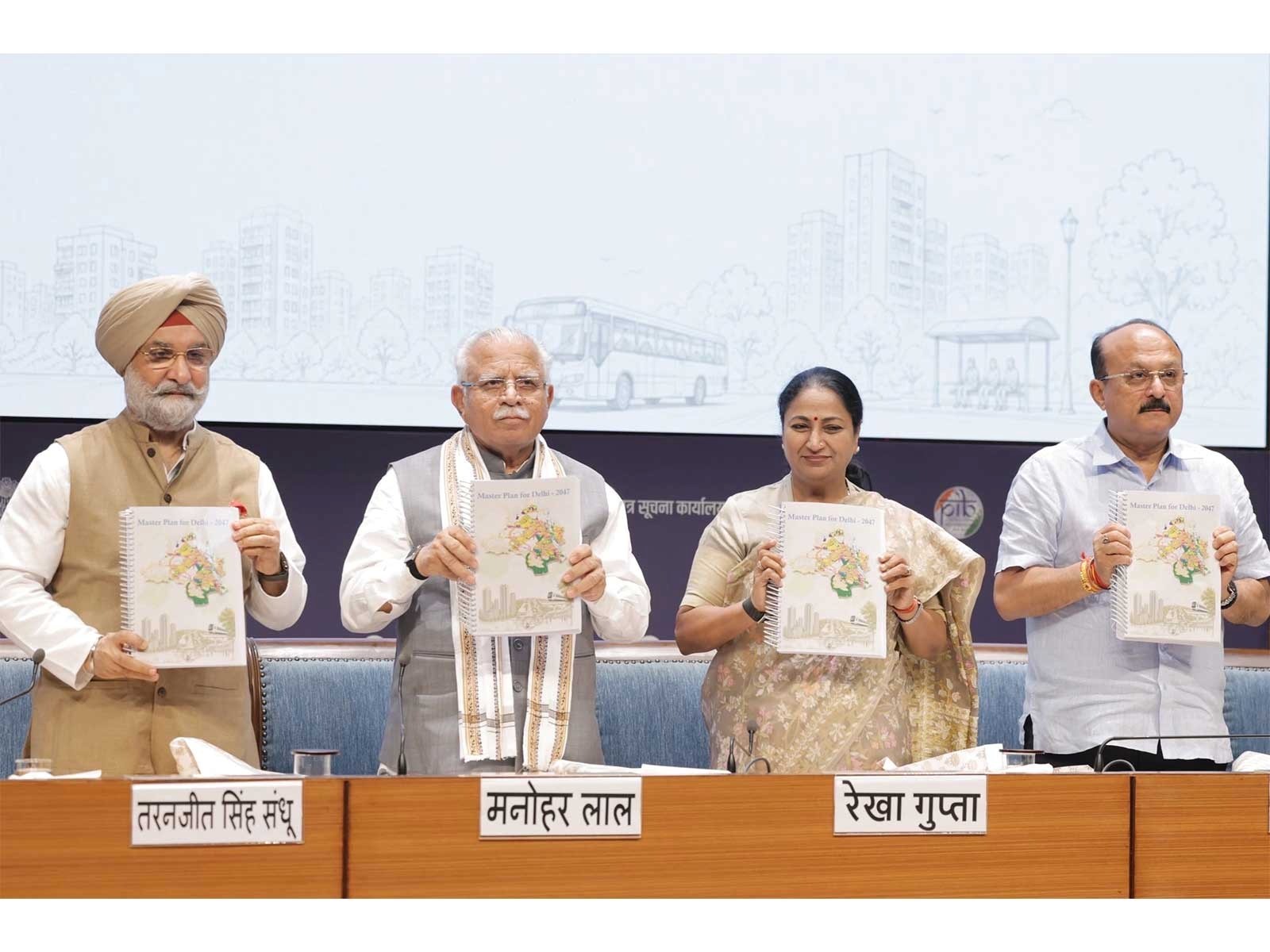
Due to weak enforcement, slow land acquisition and a mismatch between projected and actual population growth, Delhi would move on every time a plan was being implemented. MPD 2047 after being approved by the DDA on 12 August 2026 received Central Government approval and was officially notified on 20 August 2026. There is a lot to MPD-2047 and in many ways it is an attempt to bridge that gap between paper and pavement.
DELHI’S 2047 BLUEPRINT
The Delhi Development Authority’s Master Plan 2047 is formulated around a projected population of 3.2 crore and promises around 40 lakh new homes including 18 lakh affordable units in Transit-Oriented Development zones and has a single parking policy. It also has an environmental angle of reviving Yamuna, protecting the Ridge and rethinking drainage in a city that floods almost every monsoon. The defining feature is an infrastructure led growth model wherein development follows places where infrastructure exists or is being built. The plan commits to a two pronged strategy of redevelopment in built up areas via TOD and land pooling for greenfield expansion.
MPD offers in-situ rehabilitation to slum clusters and also provides for regularization of unauthorized colonies. As far as transport is concerned the plan proposes a unified metropolitan authority as a single body for transport planning and enforcement and wants to further approximately 279 km more to the metro network.
Delhi’s development was originally envisioned as led by the public sector but that model was abandoned after the 1990s economic reforms. We now see a full fledged shift to infrastructure and market led densification. Transit-oriented urbanism is one aspect that allows transport to be the spine that organizes the city. We also witness a real estate-led model of land that values it as an asset and it encourages redevelopment rather than endless expansion.
Singapore has rebuilt itself around its MRT network. The Chinese city of Shenzhen has densified around metro corridors as it evolved from a fishing town to a megacity and even Mumbai’s current redevelopment push is based on the same real-estate driven densification rationale. Therefore Delhi is borrowing a template that has worked elsewhere in Asia.
PROMISES CARRY QUESTION MARKS
Putting rose colored glasses on will show us that MPD 2047 differs from the previous plans and has notable features that could potentially make Delhi structurally a livable city. But take those glasses off and see that every claim of the plan can be further questioned.
More housing sounds great, but is it going to be affordable? Does the city even have enough existing infrastructure to support density ? Transit corridors look beneficial in theory but they have a nasty habit of becoming the most expensive real estate in any given city.
A new apartment tower is not equal to affordable housing. Redevelopment is not rehabilitation and land monetization is not public value. If Delhi becomes expensive due to its efficiency, not many will be able to live the comfort this plan promises. That is the most pointed question looming over MPD-2047. It assures development but development for whom?
Housing and Land Rights Network’s Shivani Chaudhry opined that regularization announcements in Delhi have been made repeatedly without being implemented, and stressed the process “must be an inclusive one that does not exclude people on account of faulty surveys, minor technicalities, or their inability to pay”
CONCLUSION
Success should not be measured only in kilometers of the metro or investment attracted but also in average commute times, housing and rental affordability, air quality, water availability and access to parks, schools and hospitals. Delhi cannot plan in isolation because it does not function in isolation. Delhi’s master plans have always promised more than they have delivered but MPD 2047 seems to have better intentions, at least on paper. But intentions aren’t outcomes. Its real test is not the document, its whether Delhi’s governance can actually execute what’s written, instead of repeating the same implementation gaps.
Sources
Business Standard. (2026, August 20). Delhi Master Plan 2047: 40 lakh flats, housing, TOD, land pooling, UER 2. https://www.business-standard.com/economy/news/delhi-master-plan-2047-40-lakh-flats-housing-tod-land-pooling-uer-2-126082001031_1.html
CEIC Data. (n.d.). Census: Population: Delhi: Delhi.
Delhi Development Authority. (2007). Master Plan for Delhi–2021: Text report. https://dda.gov.in/sites/default/files/inline-files/Master_Plan_for_Delhi_2021_text_report.pdf
Delhi Development Authority. (2026, August 20). Notification of the Master Plan for Delhi – 2047 [PDF]. https://dda.gov.in/sites/default/files/notice/275618.pdf
Delhi Development Authority. (n.d.-a). Draft Master Plan for Delhi 2021.
https://dda.gov.in/index.php/draft-master-plan-delhi-2021
Delhi Development Authority. (n.d.-b). Master plan. https://dda.gov.in/master-plan
Delhi Development Authority. (n.d.-c). Master plan for 1962. https://dda.gov.in/master-plan-1962
Delhi Development Authority. (n.d.-d). Planning [DDA services portal]. http://ddaservices.dda.org.in/ddaweb/planning.aspx
Economic Times Government. (2026, August 12). DDA approves Delhi Master Plan 2047 to guide capital’s future growth, sent for Centre’s nod.
Indian Express. (2012, February 6). Illegal colonies in Capital result of ‘bad planning’: Kamal Nath. https://indianexpress.com/article/news-archive/web/illegal-colonies-in-capital-result-of-bad-planning-kamal-nath/?utm
NDTV. (2026, August 20). Delhi Master Plan 2047 notified: 40 lakh homes, unified parking, 24x7 city. https://www.ndtv.com/india-news/delhi-master-plan-2047-notified-40-lakh-homes-unified-parking-24x7-city-11937830
Press Information Bureau, Government of India. (2026, August 20). Delhi Master Plan 2047 receives Central Government approval [Press release].
https://www.pib.gov.in/PressReleaseDetail.aspx?PRID=2301684®=48&lang=1
Rajya Sabha Secretariat. (2011, December 14). Synopsis of proceedings. https://cms.rajyasabha.nic.in/UploadedFiles/Synopsis/SynopsisUpload/224/14122011.pdf
Shah, N., & Editorial Team. (2026, August 22). Delhi 2.0: Metro, RRTS, TOD & MMTH in MoHUA’s Master Plan for 2047. Metro Rail News.
https://metrorailnews.in/delhi-2-0-metro-rrts-tod-mmth-in-mpd-2047/
StatisticsTimes.com. (2026). Delhi population 2026.
https://statisticstimes.com/demographics/india/delhi-population.php
Continue reading
 Journalism
One Seat Multiple Stakes
15 October 2026
By-elections may involve fewer voters, but their political consequences can be significant. From historic victories to closely contested seats, they shape leadership, test political strength, and uphold representation, proving that even a single seat can influence the broader democratic landscape.
 Journalism
Transparency, Verifiability and Accessibility of Voter List in India
9 October 2026
India’s electoral roll revision has sparked questions about transparency, accountability and the risk of eligible voters being excluded. As scrutiny of the Election Commission intensifies, the central challenge is balancing accurate voter lists with citizens’ right to participate in democracy.
 Journalism
A ROLL CALL FOR DEMOCRACY
1 October 2026
The Supreme Court has upheld the Election Commission’s mass voter-list revision, yet internal objections from two of its own commissioners and Opposition charges of irregularities keep the debate over electoral trust alive across India.
0 likes · 0 comments
Comments
No comments yet.
Your comment