
BRICS: BRIDGE TO THE GLOBAL SOUTH
The Starting
The acronym BRIC first appeared in a research paper by Goldman Sachs in 2001, describing the four emerging economies, Brazil, Russia, India and China. In 2006, on the side lines of the UN general assembly the four countries held their first foreign minister’s meeting. This led to the formation of BRIC. The inaugural summit took place in 2009 in Yekaterinburg, Russia. South Africa joined as a member in 2010, turning BRIC into BRICS and becoming the first African country in the bloc.
Evolution
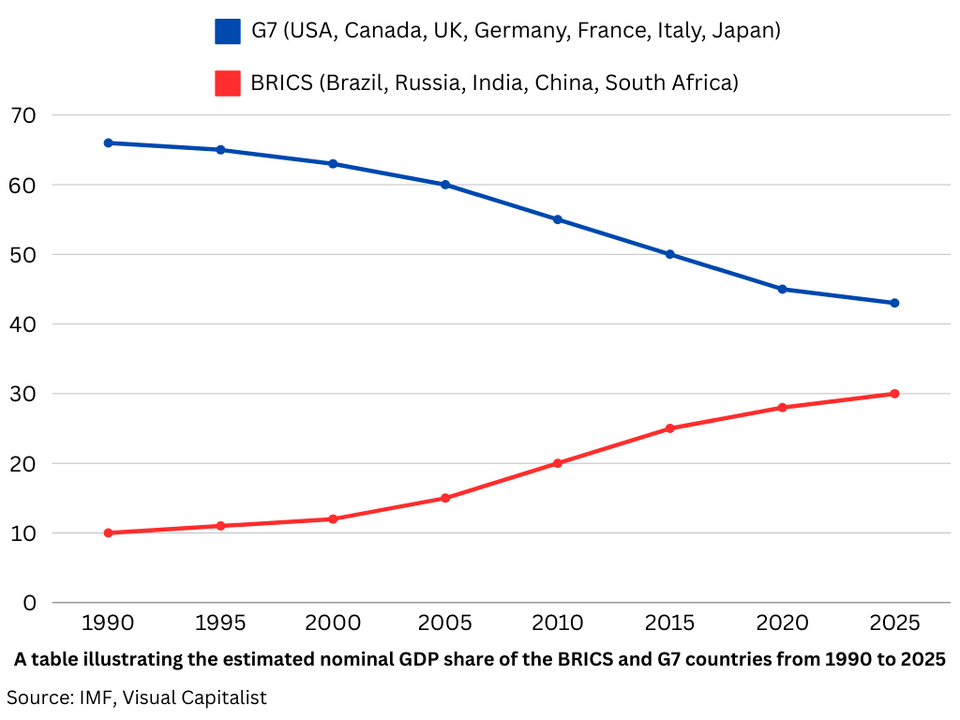
Initially, BRICS served largely as a coordinating forum for emerging economies, resisting against Western domination in institutions like the IMF and World Bank. This changed in 2014 with the establishment of the New Development Bank and the Contingent Reserve Arrangement. Both are financial tools meant to reduce dependence on the dollar-based systems. In 2023- 24 many new countries like Egypt, Ethiopia, Iran, Saudi Arabia and UAE join the bloc. Ten more “partner countries” joined in 2025 including Belarus, Indonesia, Nigeria and Vietnam. BRICS today represents almost half of the world’s population and an increasing share of global GDP.
Contemporary Issues
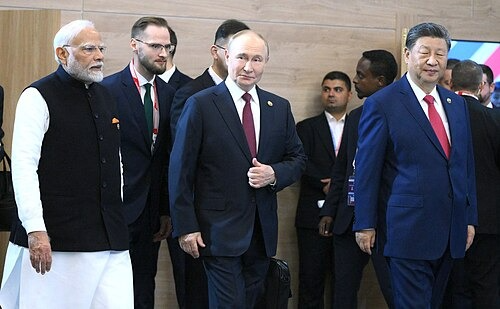
The addition of new countries has brought leverage but has also led to friction. Balancing India's diplomatic ties with western countries in light of their position against China and Russia has been a consistent issue. Trade arrangements like unilateral tariffs and disagreements over major geopolitical conflict have tested the bloc's ability to reach consensus. Reducing dependence on dollars remains a crucial goal alongside contemporary issues like AI governance, energy security and reforming institutions like the UN security council.
2026 New Delhi Summit
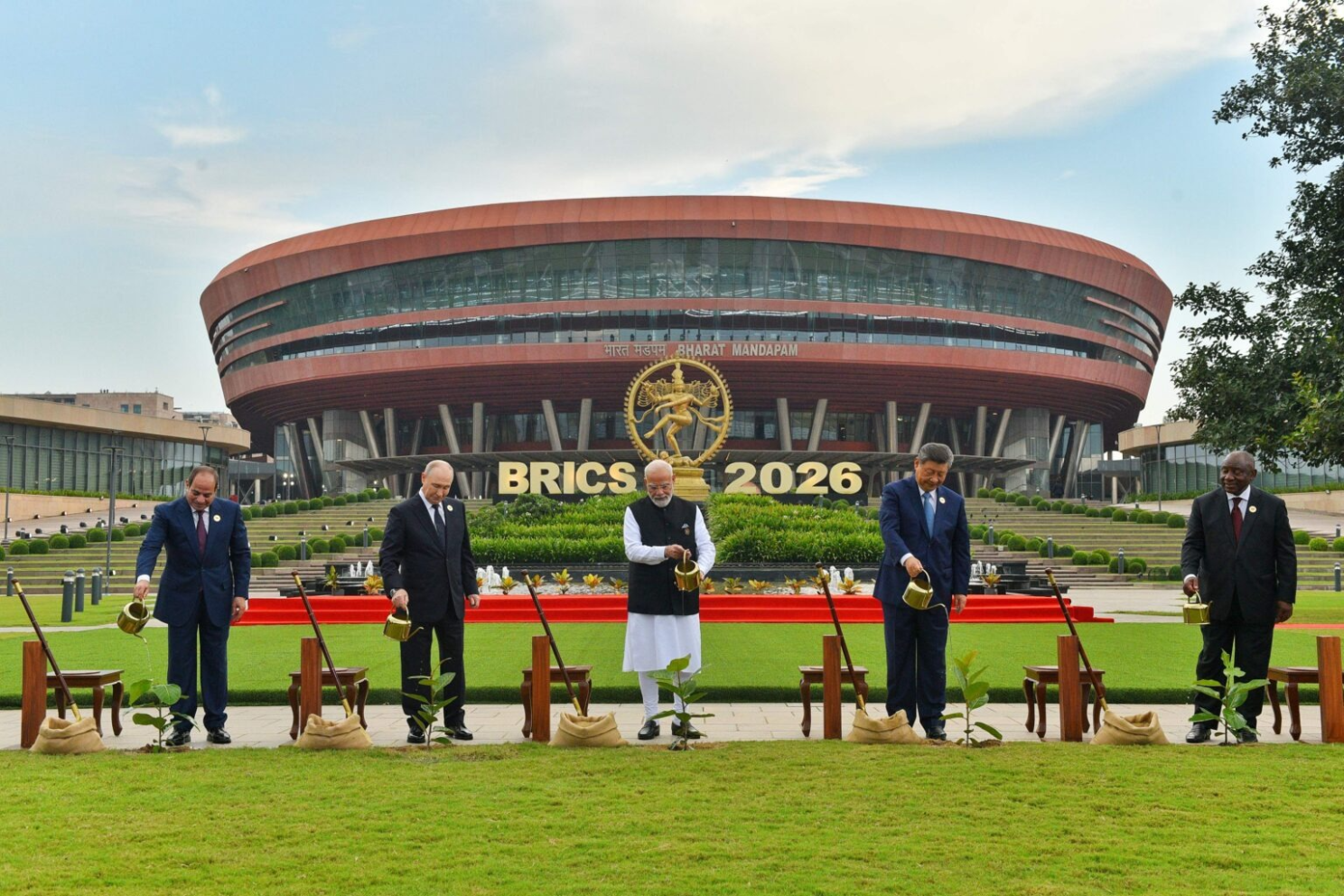
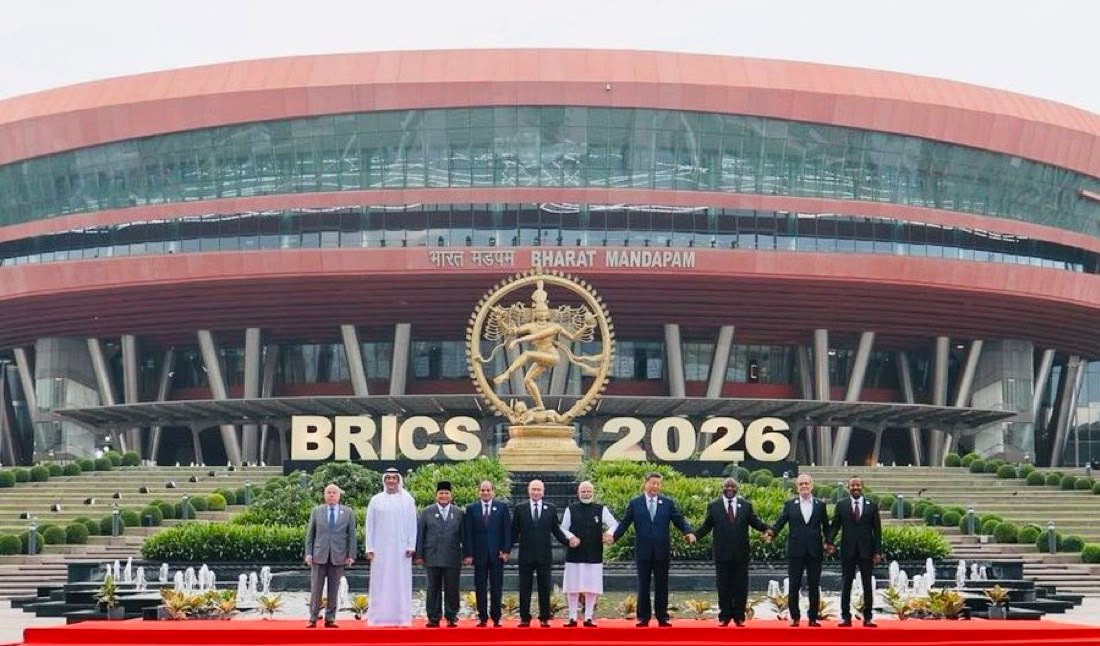
India is hosting the summit for the fourth time, from September 12th to 13th at Bharat Mandapam in New Delhi. Over 400 ministerial and working level meetings across 30 citizen India will be followed by the leaders’ gathering. On September 12th the “New Delhi declaration 2026” was unanimously adopted. It’s a crucial step towards bridging divisions over the conflict in West Asia. The declaration also condemned terrorism in all forms, with explicit reference to the April 2025 Pahalgam attack in Jammu and Kashmir. It focused on contemporary issues like cross border payment mechanism, local currency trade settlement and voiced concerns over unilateral tariffs that are inconsistent with World Trade Organisation guidelines. It endorsed AI governance, energy transition and increased representation for developing nations at institutions like the UN, IMF and World Bank. Prime minister Modi stated that the summit’s ambition is transforming the “pyramid of privilege” into a “platform of partnership” for the Global South.
For India hosting the summit comes with its own challenges. Managing leadership of the Global South while balancing a diplomatic act between Russia and China’s adversarial relation with Washington.
The Take Away
On September 13, 2026, Prime Minister Modi held a series of critical bilateral meetings with leaders from seven nations, including South Africa, Egypt, and Nigeria. The day featured an open plenary session focused on Global South cooperation, inclusive global governance, and UN reforms.
In two decades BRICS has transformed from an acronym to an expanding economic organisation and an increasingly important voice in global diplomacy. The New Delhi summit highlights both its growing ambition and the consistent work still required in coordinating the interest and needs of eleven diverse economies.
Sources
BRICS New Delhi 2026, MyBharat https://mybharat.gov.in/pages/brics_new_delhi_2026
BRICS India 2026 (Official), Government of India https://www.brics2026.gov.in/
Wikipedia https://en.wikipedia.org/wiki/18th_BRICS_summit https://en.wikipedia.org/wiki/BRICS
"BRICS meets in India: What's on the agenda, why it matters," Al Jazeera https://www.aljazeera.com/news/2026/9/12/brics-meets-in-india-whats-on-the-agenda-why-it-matters
"BRICS New Delhi Declaration: Building for Resilience, Innovation, Cooperation and Sustainability," Prime Minister of India (Sept 12, 2026) https://www.pmindia.gov.in/en/news_updates/brics-new-delhi-declaration-building-for-resilience-innovation-cooperation-and-sustainability-september-12-2026/
Continue reading
 Journalism
One Seat Multiple Stakes
15 October 2026
By-elections may involve fewer voters, but their political consequences can be significant. From historic victories to closely contested seats, they shape leadership, test political strength, and uphold representation, proving that even a single seat can influence the broader democratic landscape.
 Journalism
Transparency, Verifiability and Accessibility of Voter List in India
9 October 2026
India’s electoral roll revision has sparked questions about transparency, accountability and the risk of eligible voters being excluded. As scrutiny of the Election Commission intensifies, the central challenge is balancing accurate voter lists with citizens’ right to participate in democracy.
 Journalism
A ROLL CALL FOR DEMOCRACY
1 October 2026
The Supreme Court has upheld the Election Commission’s mass voter-list revision, yet internal objections from two of its own commissioners and Opposition charges of irregularities keep the debate over electoral trust alive across India.
0 likes · 0 comments
Comments
No comments yet.
Your comment